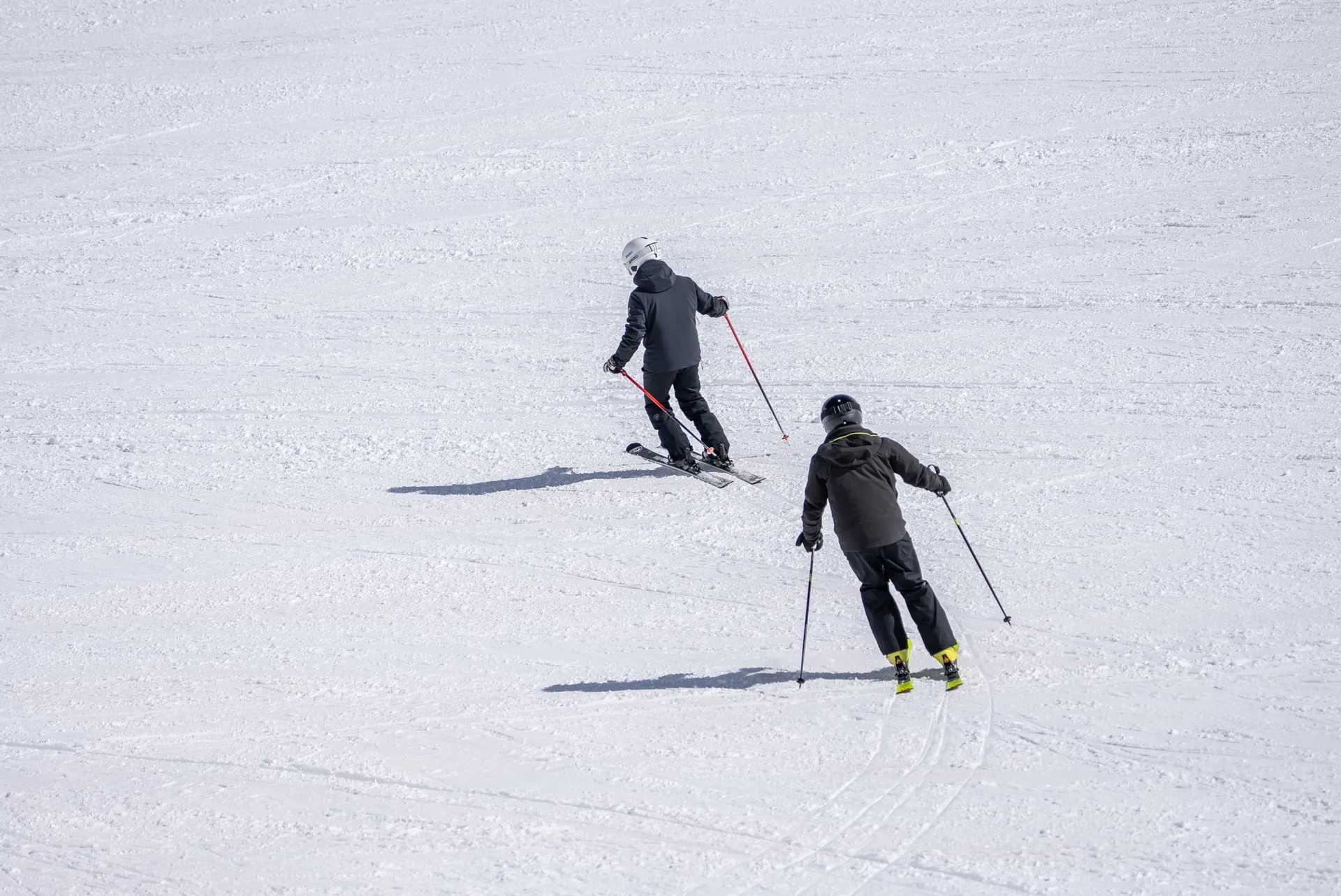
Piste conditions in Baqueira are the first thing anyone checks before going up: open kilometres, depth and type of snow. But anyone who skis here a lot of days knows the report and the actual snow do not always agree.
It happens often. The report announces powder or machine-groomed snow and, across a good part of the resort, the snow is already hard or transformed. Anyone who does not know where the quality holds up can end up skiing icy pistes full of frozen lumps.
In this guide I tell you how I read the report every morning, after more than two decades teaching in Baqueira. What I check before going up, what I check once I am on the mountain and how I decide where to ski according to the real snow. It is the same thing we do every day with a ski instructor in Baqueira.
Which pistes in Baqueira are open today, and where to check?
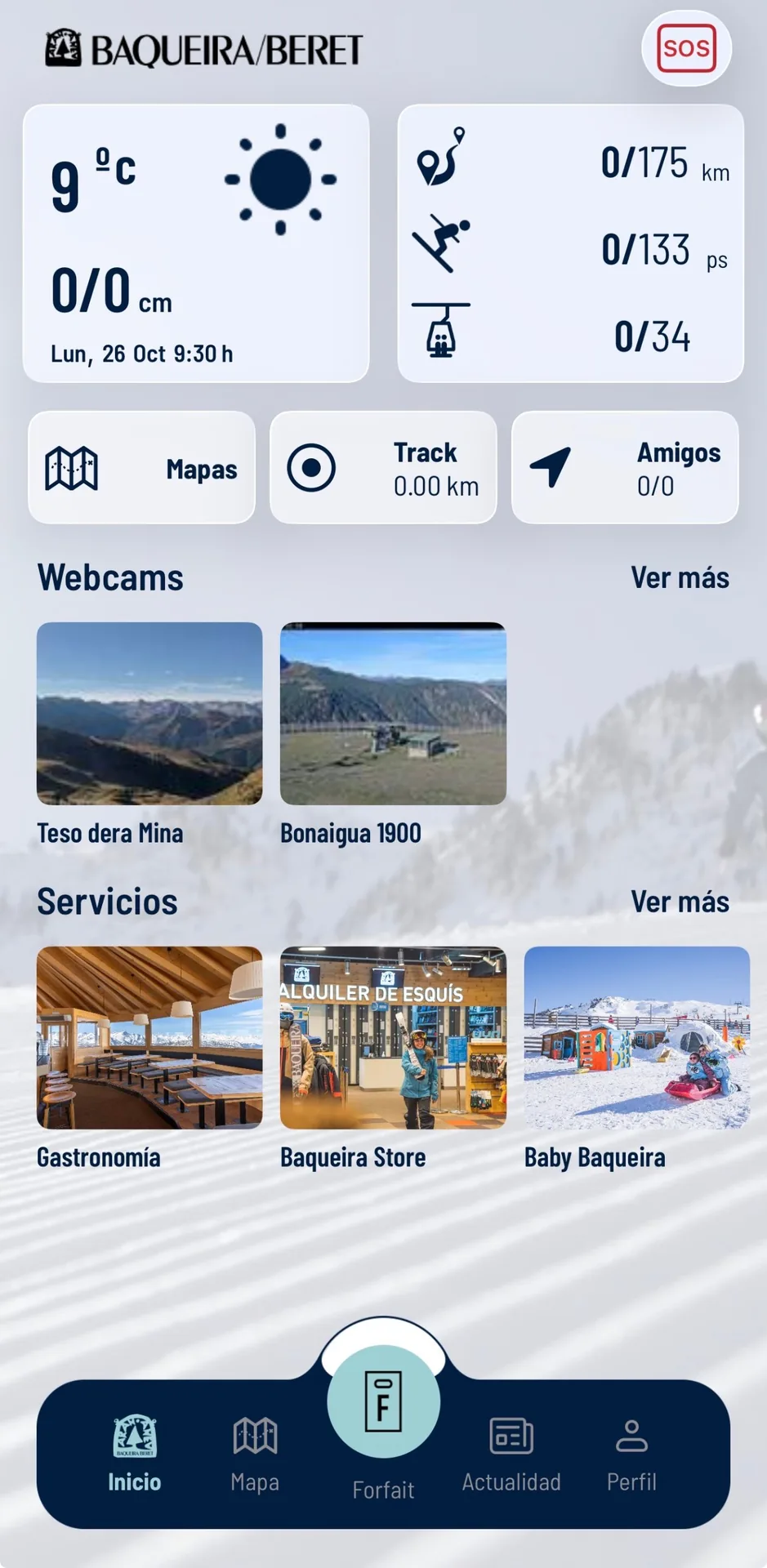
The state of each sector, with its open pistes and running lifts, is checked in the official Baqueira Beret app. Also on its official website, baqueira.es. It is the reference source, and it changes during the day.
The weather forecast for Baqueira: what to check before you go up
Before looking at the report, I look at the sky. I cross-check the forecast against two or three sources, such as tiempo.es or Meteoaran, because none of them gets it right on its own every time.
If it has snowed, or it is a time of sudden changes, I also check the Lauegi avalanche bulletin, the forecasting centre for the Val d'Aran. With all that I decide the layers and the kit for the day.
The Baqueira Beret app: how to see which pistes and lifts are open
Once I am in the Huevo, as we call the Baqueira gondola, I open the official app. It tells me which pistes and lifts are open and which are not. That is how I set out the morning's itinerary.
Why do piste conditions change during the day?
The report is not a fixed photograph. Wind, a snowfall or a change in temperature can close a lift mid-morning. That is why I check it through the day, and always before crossing to a particular sector. That way I choose the exact piste and do not arrive at one that is closed.
How to see the snow live in Baqueira Beret before you go up
The report says what is open. The webcams show you how it is. Before leaving the house or the hotel, the live Baqueira Beret webcams settle in a minute what the report does not tell you.
What to look for in each Baqueira webcam
| Camera | What it tells you |
|---|---|
| Baqueira 1500 | How the base looks and whether there is a queue for the gondola. Useful for deciding what time to go up |
| Baqueira 1800 | Visibility and the state of the mid-mountain pistes, the starting point for almost every lesson |
| Beret | Whether the fog is lifting. Beret usually clears before Baqueira: it has low woodland and the cloud does not pile against the mountain as much. If the camera is already clear, it may be the sector to start in |
| Bonaigua | How visibility is on the pass. When the cloud comes in, the best move is usually to change sector: Bonaigua has almost no trees or reference points. On Argulls, a flat-bottomed U, it is easy to lose your bearings and have a bad time. If you are already in Bonaigua, pistes like Teso dera Mina can be the alternative |
How to cross-check the webcam against the snow report
Neither source is enough on its own. The report can announce powder and the camera show pistes gleaming with hard snow. When they disagree, it is not that one of them is wrong: the report sums up the whole resort, and the camera shows one spot at one moment. The snow changes from one face of the mountain to another.
How much snow is there in Baqueira? Depth at the top and at the bottom
The report gives the depth at two or more points, usually top and bottom. It is a useful figure, but an easy one to misread.
What does snow depth in the report actually mean?
Depth measures how much snow has accumulated, not what state it is in. A metre at the top guarantees you can ski, but it does not say whether the snow is powder, hard or spring. And the difference between top and bottom is usually large, above all at the start and the end of the season.
Why a lot of snow is not always good snow
After several days without snowfall the depth is still high, but the snow has transformed, frozen overnight or been blown by the wind. Whereas with little depth and a recent snowfall you can ski excellent snow wherever there is a base.
Not all of the resort has snow cannons either. Baqueira has pistes of 100 % natural snow, such as Solei and Manaud, which depend only on what falls.
Powder, hard, spring or wind-blown: what each term in the report means
The report says what snow there is, but not what that means for your day. Each type changes the grip, the tiredness and the level you need to enjoy it.
| Term in the report | What you will find | What is worth knowing |
|---|---|---|
| Powder | Freshly fallen, soft snow | Off-piste, this is the day. On-piste not so much: as skiers pass, moguls and bumps form |
| Machine-groomed powder | New snow the machines have groomed | A good day for skiing on-piste |
| Hard | Compact snow. It can run from hard and even to frozen | Compact and even, it is a good day on-piste. Frozen, it gets harder |
| Spring or wet | Snow that transforms in the sun. Snow that is transforming, snow still frozen and very soaked snow all sit side by side | When it transforms well it is very good. It varies a lot by piste and by hour: adapting and choosing where to go is the key |
| Wind-blown | Snow moved by the wind | Off-piste it ends up compacted and slabby, hard to ski. On-piste it alternates hard patches with drifts: you have to watch for those changes, which throw you off balance sharply |
Behind each type of snow there is a different technical adjustment. I go into it in detail in Tu centro se mueve más de lo que crees, my article in Nevasport.
Why do the lifts close for wind in Baqueira?
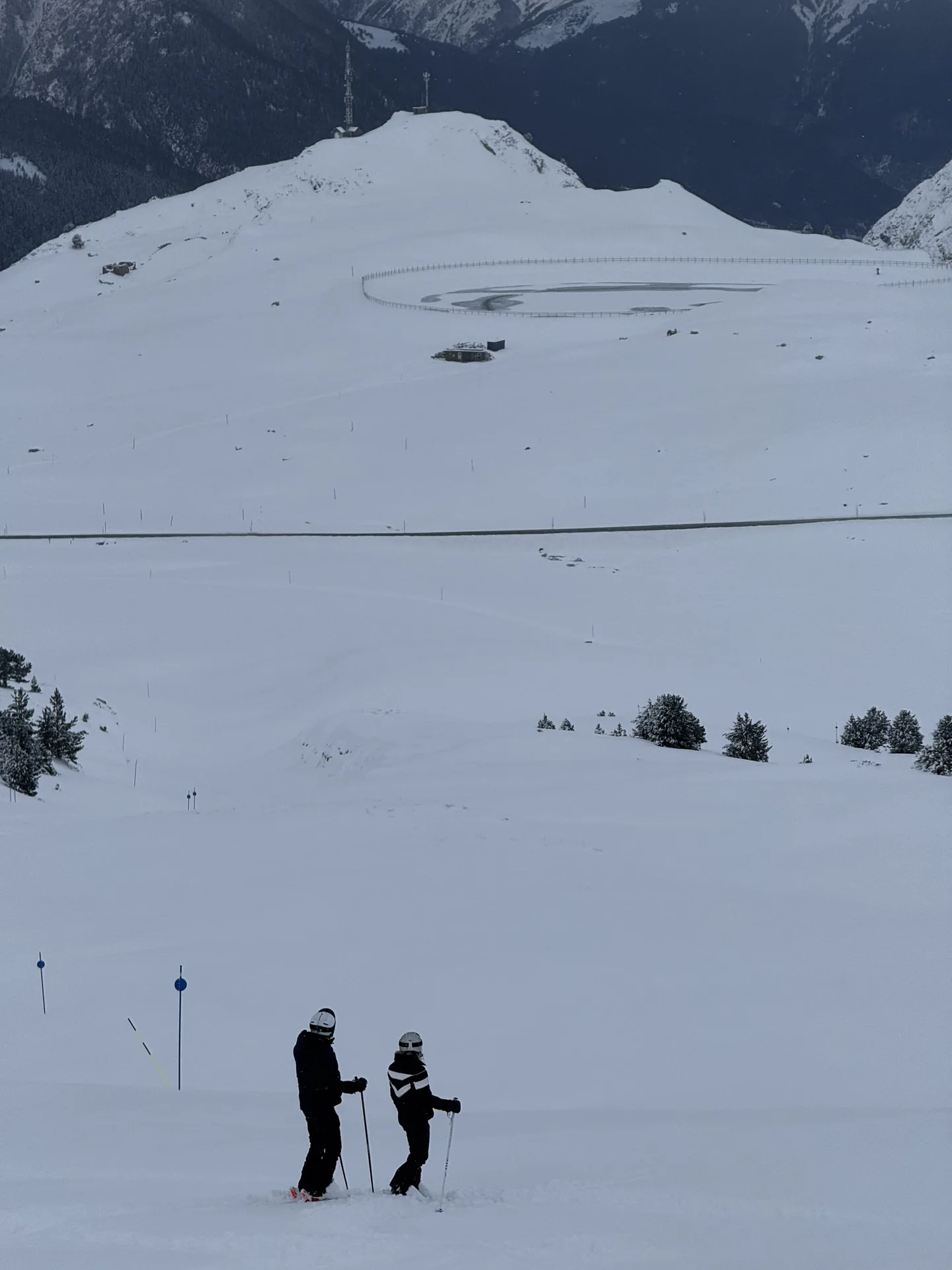
Wind is one of the factors that changes a day in Baqueira most. The first lifts to close tend to be the highest chairs and the oldest ones. So on a windy day the report can show half the resort closed even though the snow is good.
Where to ski in Baqueira when it is windy
The alternative is low down and in the trees, where the wind loses its force:
- Lower Baqueira: the Baqueira piste (the old “1”, below the Huevo), Bosque, Vuelta a Casa, Tortuga, Cascada, Liebre and Cabana.
- The lower part of the Cara Nord: Ta Orri, Eth Tamarro and Hurat deth Bo, plus the last pitch of the Cara Nord, reached from Cabana without going up high.
- The Saumet drag lift, if it is open. From the top, Eth Coret comes down through the trees: an easy red, almost a blue. Before going up, check in the app that both the lift and the piste are open.
In wind, the lifts open and close through the day. So it is worth checking the app again before crossing to any of these areas.
Where the best snow is in Baqueira, by aspect and by time of day
The snow is not the same everywhere in the resort at the same hour. What decides where to ski is which way each piste faces and how much sun it has had. Baqueira has an advantage here: it is the only mountain in the domain that is skied on all four of its faces.
Which aspect to ski first thing in Baqueira
First thing, I decide according to what the day calls for. If it is cold and what I want is sun and warmth, I go to the high south faces, the first to get light. If I am after the best snow, there is no fixed rule: it depends on how it snowed, on how cold the night was and on the wind. I adapt to the day and choose the pistes I think may be in the best shape.
How the snow changes through the day in Baqueira
Each aspect changes at its own pace with the sun and the temperature, and a piste that is good at ten may not be at midday. On top of that comes the traffic: skiers passing scrape the snow and form moguls, and that changes the quality of the terrain you ski.
Reading the snow and the traffic is part of the instructor's job in our ski lessons in Baqueira. With that reading they look for the aspect and the piste in the best condition at any given moment.
Is Baqueira's snow report reliable?
The report sums up the whole resort in a few words. When it announces machine-groomed powder, that is true somewhere. But, in my experience, it is common for a good part of the resort to have hard or transformed snow already.
It is not that the report lies: it summarises conditions that vary. The snow changes from one altitude to another and from one face of the mountain to another. There can be machine-groomed powder between 2,610 and 2,000 metres and none between 2,000 and 1,500. On top of that come the hour, the temperature, the wind and the passage of skiers.
That is why no single source is enough. The report gives the summary; the webcams, a picture of particular spots at a particular moment. Crossed with the aspect of each piste, the temperature and the wind, they get you much closer to what you are going to find.
The difference lies in knowing where the snow changes least and where it keeps its quality. With that, you have far more chance of skiing what the report announces. Without it, it is easy to end up on icy pistes, with frozen lumps, transformed snow, moguls or hard plates between drifts.
Which ski lesson suits you, given the state of the snow?
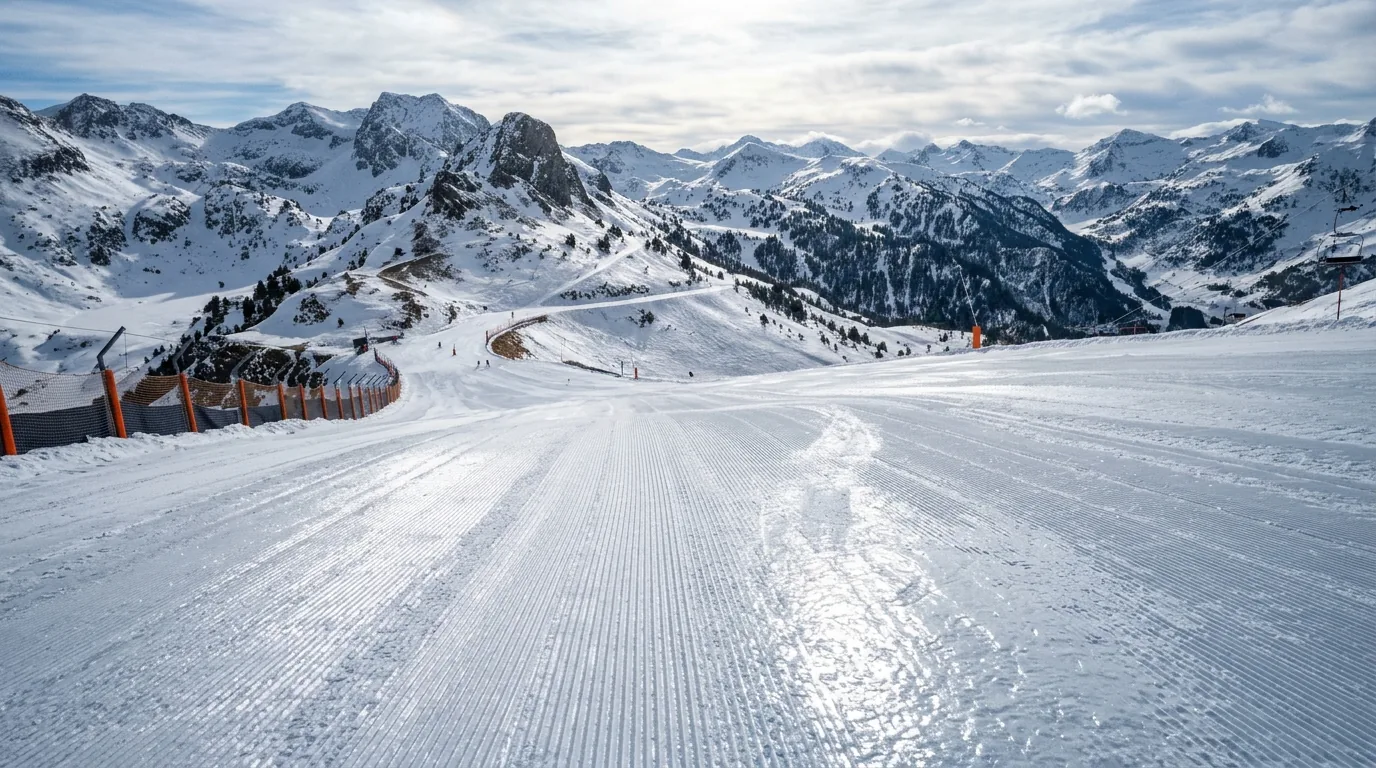
Each snow condition opens up a different chance to learn. Before booking, cross the report with the webcam and choose the lesson that pays off most that day.
| If the report and the webcam say… | The lesson that pays off most |
|---|---|
| Recent powder and good weather | An introduction to freeride, for anyone already comfortable on reds |
| Hard or frozen snow | General technique on-piste: precision, edging and the outside ski. For anyone with the level, a session with Carv |
| Spring | Choosing the hour well and making the most of the window in which the snow transforms on each piste, sector and aspect |
| Fog or wind | A lesson in sheltered areas, low down and in the trees, with the instructor as a guide |
| Wind-blown snow or drifts | Work on balance and on adapting to changes in terrain |
Tell us your level and your dates, and we will propose the lesson and the area that best fit the snow of that day.
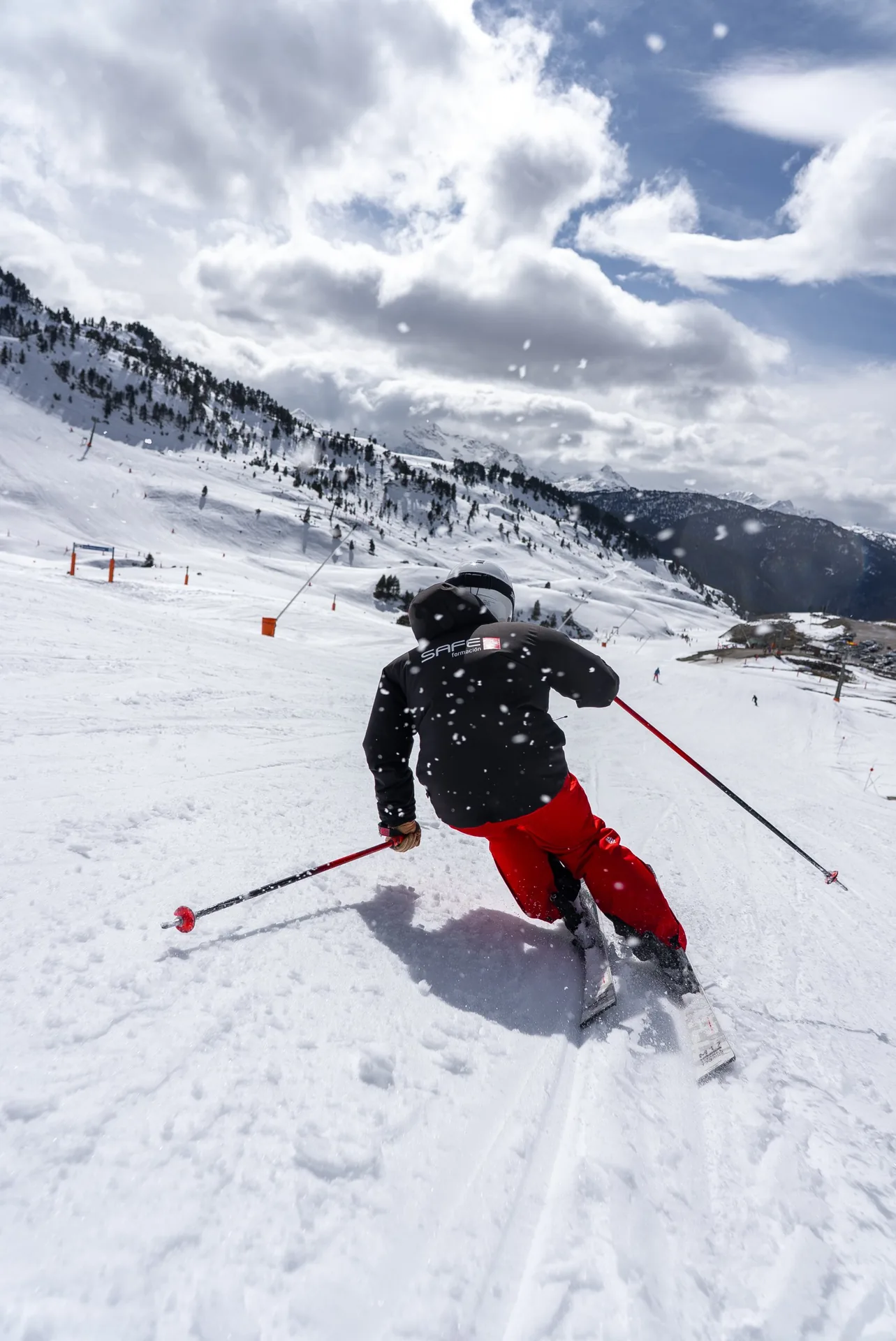
Ski Baqueira according to each day's conditions
The report tells you what there is. An instructor who knows every face of the mountain adapts the itinerary to that day's conditions and looks for the best options available. Tell us your level and your dates, and we will prepare the day around the conditions.
Víctor Puche Fita, Technical Director TD3, SAFE Formación Demonstrator and founder of Alpine Ski Academy.
Sources, consulted on 26/10/2026: Lauegi avalanche bulletin, Centre de Lauegi d'Aran · Puche Fita, V., Tu centro se mueve más de lo que crees, Nevasport, 22/09/2026.