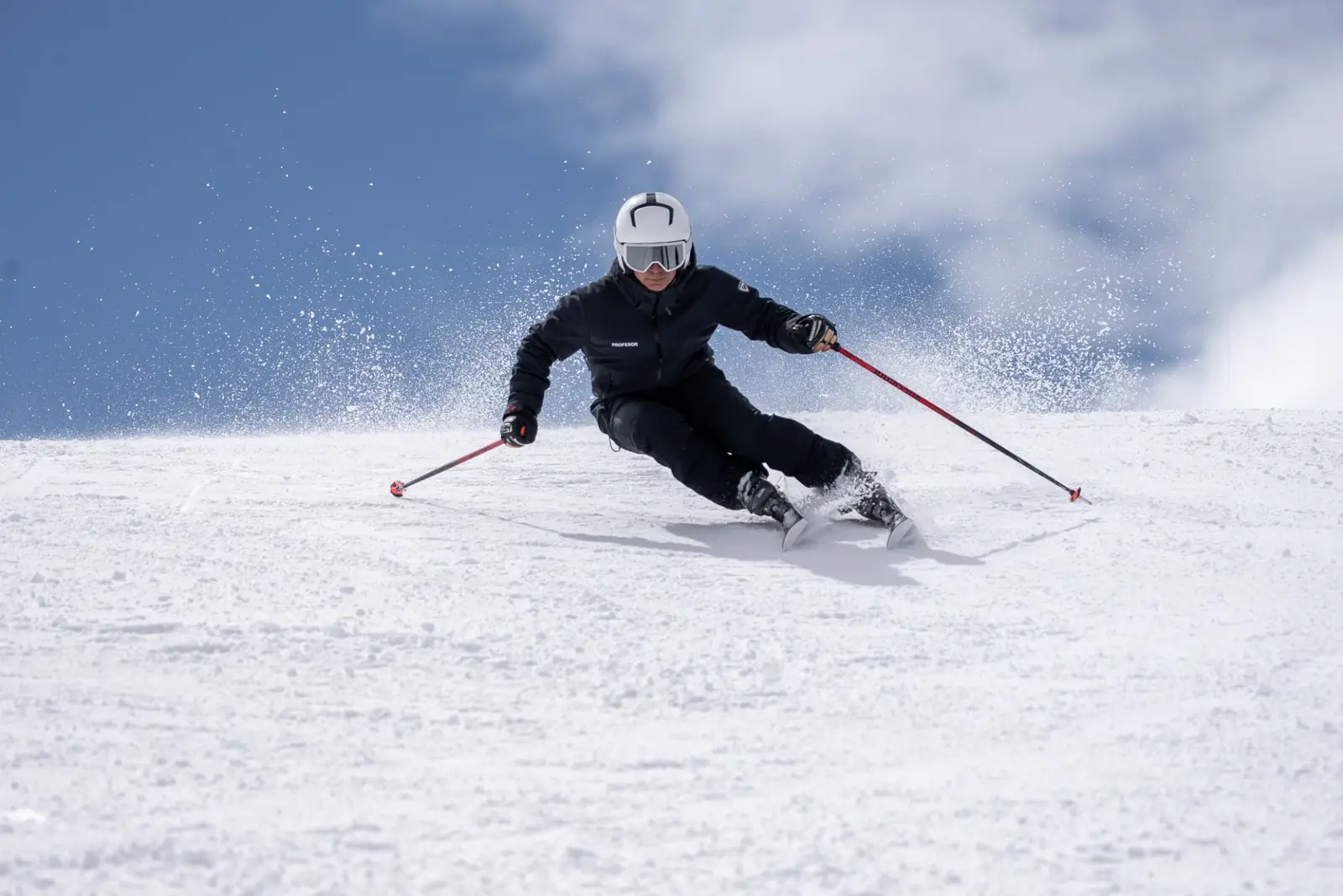
I have spent many seasons working in Baqueira, and there is one question I get asked constantly out on the slopes: “am I really improving, or does it just feel that way?” It is a fair doubt. Skiing is a bodily sensation that is hard to measure by eye, even for an experienced instructor. That is where Carv comes in.
Carv is a sensor system that fits into your boots and turns every run into concrete data: how you edge, the rhythm you turn at, how you execute each turn to the left and to the right. It does not replace an instructor's technical judgement, but it gives that judgement something it did not have before: the ability to measure in numbers whether a correction works or does not work.
At Alpine Ski Academy we have spent years building Carv into our private lessons, and what I have learnt using it with dozens of students is that its great value is not just the precision of the data — it is that it turns training into a game with measurable targets, and that keeps you practising in a way verbal correction alone never manages.
The problem with training “by eye” alone
Without objective data, progress in skiing depends almost entirely on the instructor's visual judgement and the student's subjective feel. Both are valuable, but both fall down in the same place: it is very hard to prove precisely whether one particular section of a run has improved on the previous one, or whether a student is genuinely concentrating on the technical point they are meant to be working on that day.
This is especially frustrating for the kind of skier who already has a solid base and is looking to fine-tune the small details — edge angle, symmetry between turns, the quality of the dynamic rebalancing — where the margin for improvement can no longer be seen by eye; it has to be measured.
What exactly Carv measures in each section
Carv needs a minimum of 8 turns in a row before it starts counting a valid section. You can link as many turns as you like; the moment you stop, the system analyses the whole set and automatically picks the 8 consecutive turns with the best average to give you that section's result — though you can also look at the data for a single isolated turn if you are interested in one very specific moment of the run.
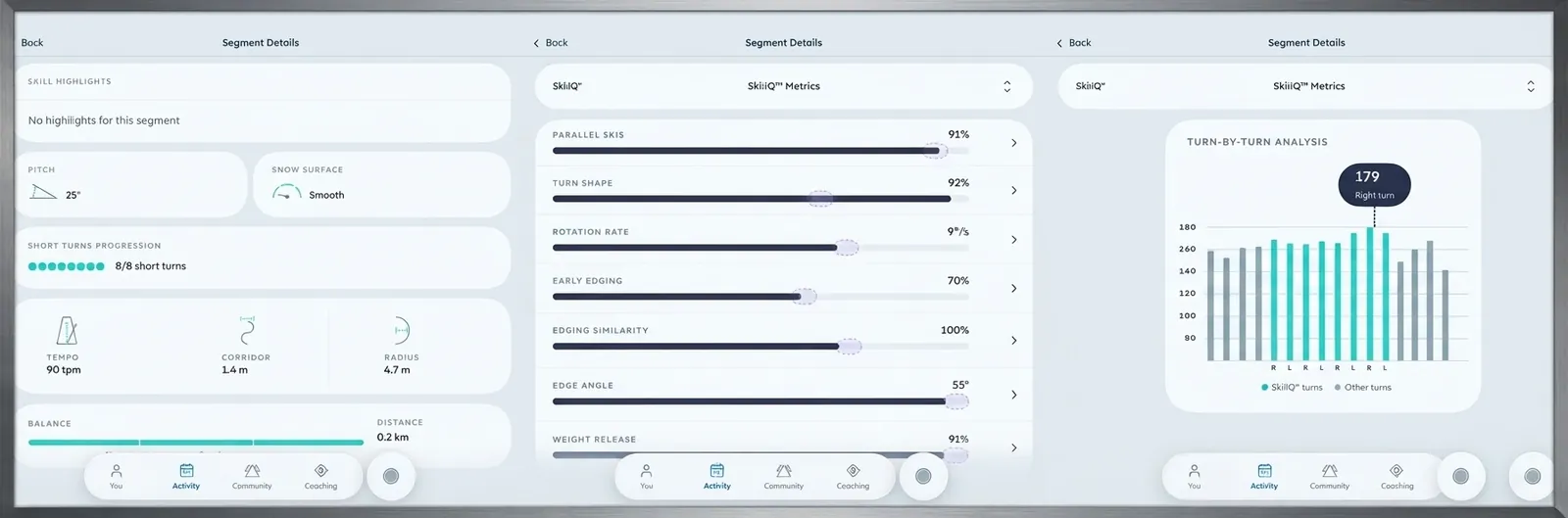
For each section, Carv records: the gradient of the terrain, the GPS track, the snow type and the technique applied (carving, parallel, short turns, moguls or off-piste), turn tempo in turns per minute, the apex-to-apex corridor, the average turn radius, the quality of the dynamic rebalancing, the section time, the number of turns, vertical metres and total distance.
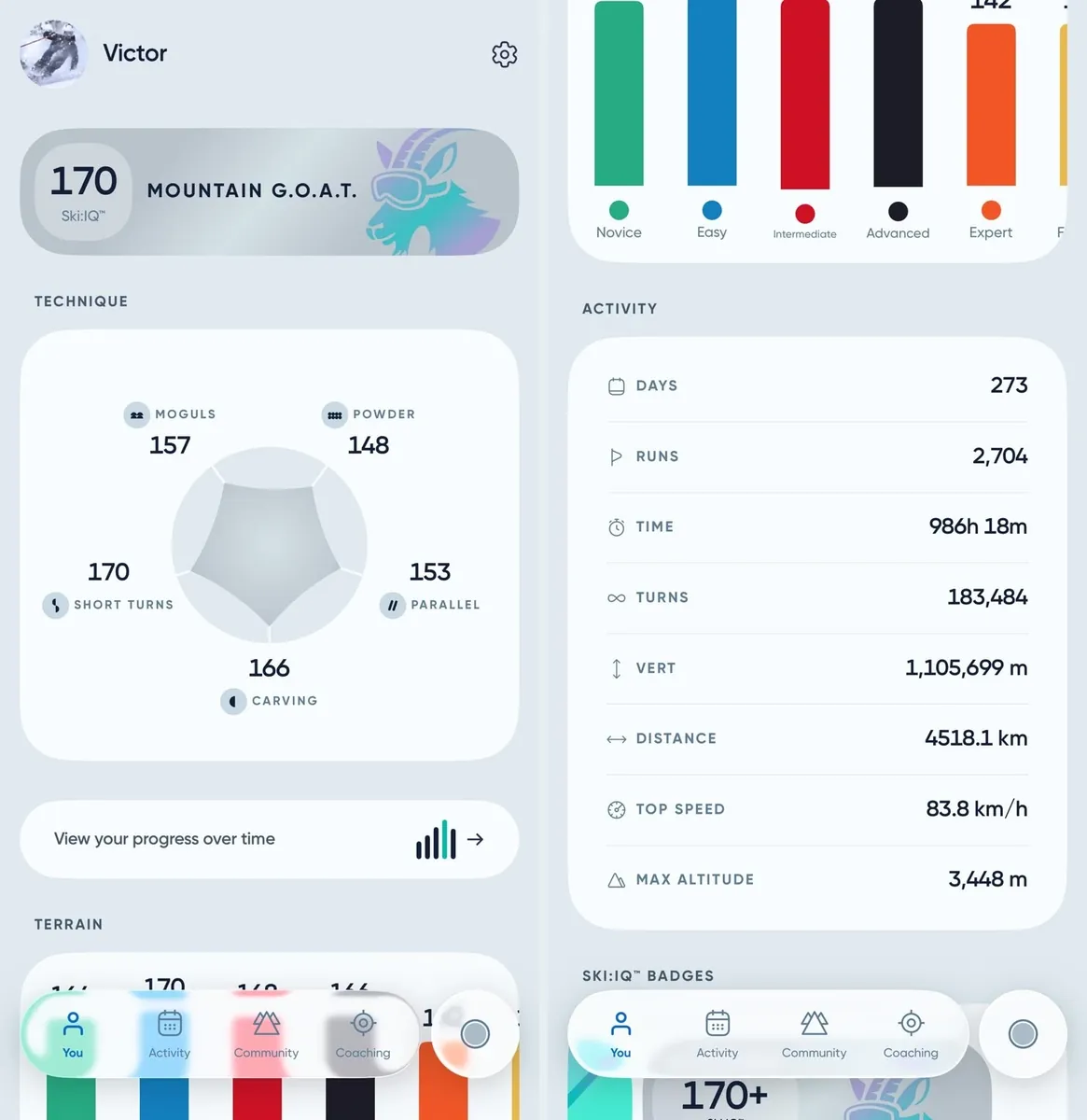
Within that data comes the fine detail: the percentage of skis kept parallel, turn shape, rotation speed in degrees per second (in short turns), the percentage of early edging, similarity between turns, edge angle, weight release and G-force — all of it broken down into left-hand and right-hand turns as well. The average of that whole set produces the section's IQ: an absolute value for the quality of that run, which feeds into a world and personal ranking, always saving your all-time best in each discipline.
Does Carv replace the instructor's judgement?
No — and this is a distinction I think matters, rather than selling you a technology as if it were magic: Carv is a game that delivers metrics and keeps you practising, but it is built on one particular technical model. That model is “correct” in inverted commas — it works very well for one kind of skiing, but it is not a religion and it is not the only valid way to ski well. There are situations and styles where that model is neither the most efficient one nor the one every skier is after. The data is a powerful tool; interpreting what to do with that data is still the instructor's job.
How the data translates into real progress
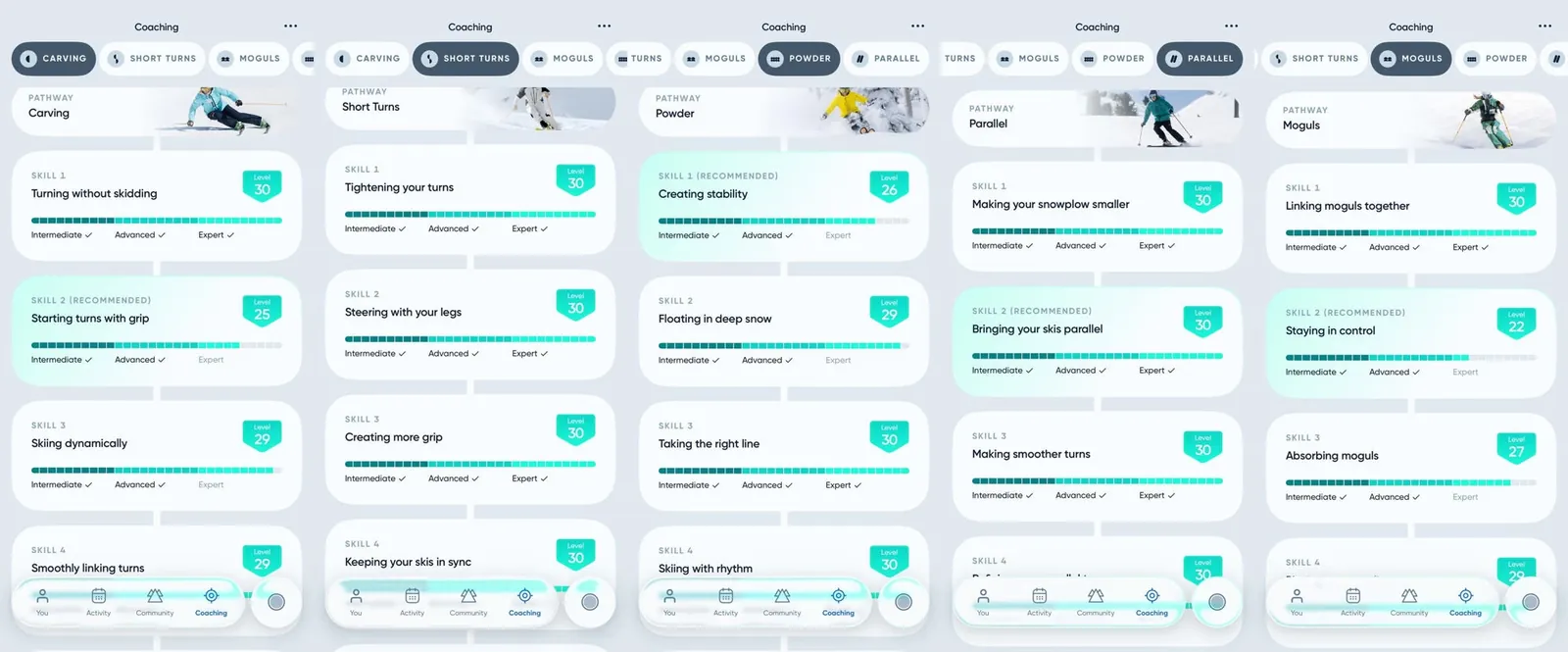
Carv also has training modes designed as game challenges: linking 8 turns in a row with more than 80 % parallelism, an average angle above 55º and weight release over 72 %, for example. Each challenge trains one specific parameter and fills up progress bars, which turns technical work — often repetitive — into something with a visible target from one session to the next.
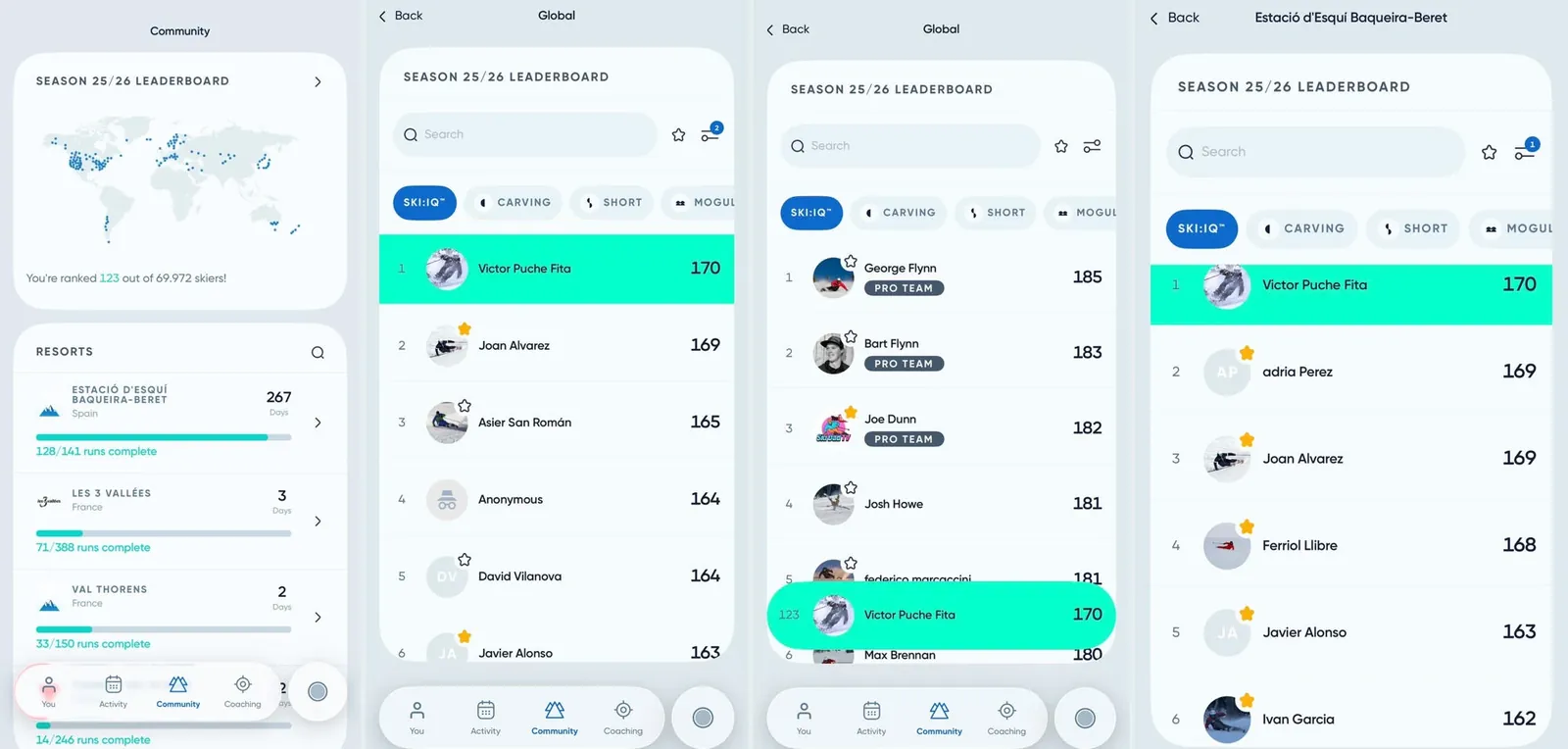
On top of that comes the comparison side: a world ranking and a local one by resort, with the option to filter by age bracket, plus a running total of vertical metres, kilometres, number of turns, hours and days skied, and even the proportion of green, blue, red and black pistes you cover. If you ski at more than one resort, you get your standing at each of them.
This year, with several students who already have their own Carv device — Marta, Carlos, Ignasi, Paco and Pep, among others — we have worked like this: they bring the sensor, and we bring the expert reading of that data applied to Baqueira. With each of them we shape the session around what they are after: some prefer to spend two hours on a single piste, repeating the same section until one detail is perfect, and others prefer to cover different terrain and snow types to see how their metrics change in each situation. Either way, pushing the overall IQ up becomes a genuine motivator to keep training.
In Baqueira, what I get most out of Carv
In Baqueira the most efficient approach is to use Carv to isolate a single parameter per session rather than trying to correct everything at once. A data point such as “you are entering the turn early” (early edging) is no use at all unless you connect it to a specific exercise and a specific piece of terrain to practise it on. That is where knowing the resort comes in: choosing the section, the gradient and the snow type that best exposes that fault so you can work on it with the data in front of you, turn by turn.
If you want to see how we build Carv into a full private lesson, with rankings, prices and the skier profile it makes most sense for, you will find all the details on our page for ski lessons with Carv technology in Baqueira.
What is the difference between training with Carv and training without Carv?
| Aspect | Without Carv | With Carv |
|---|---|---|
| Feedback | Visual and verbal, from the instructor | Visual + objective metrics for every turn |
| Measuring progress | Subjective feel | Numerical comparison from session to session |
| Motivation | Technical correction | Game challenges + ranking + IQ |
| Ideal for | All levels | Intermediate level upwards, with a settled technical base |
Book your Carv lesson in Baqueira
If you want to stop guessing how you ski and start measuring it, message us on WhatsApp and we will set up your Carv session in Baqueira, with the ski school in Baqueira Beret that sets the technical benchmark in the resort.