Table of Contents
- Rent or Buy? The Decision Most People Skip
- Why Equipment Quality Really Matters
- How to Choose Skis for Your Level
- Boots: The Most Important Part of the Rental
- Poles: A Small Detail With a Big Effect on Technique
- Snowboard Rental Guide: Board, Flex and Profile
- Helmet and Protection: Non-Negotiable
- Where to Rent in Baqueira Beret: Our Partners
- When to Collect Your Equipment: The Detail That Saves the Most Time
1. Rent or Buy? The Decision Most People Skip
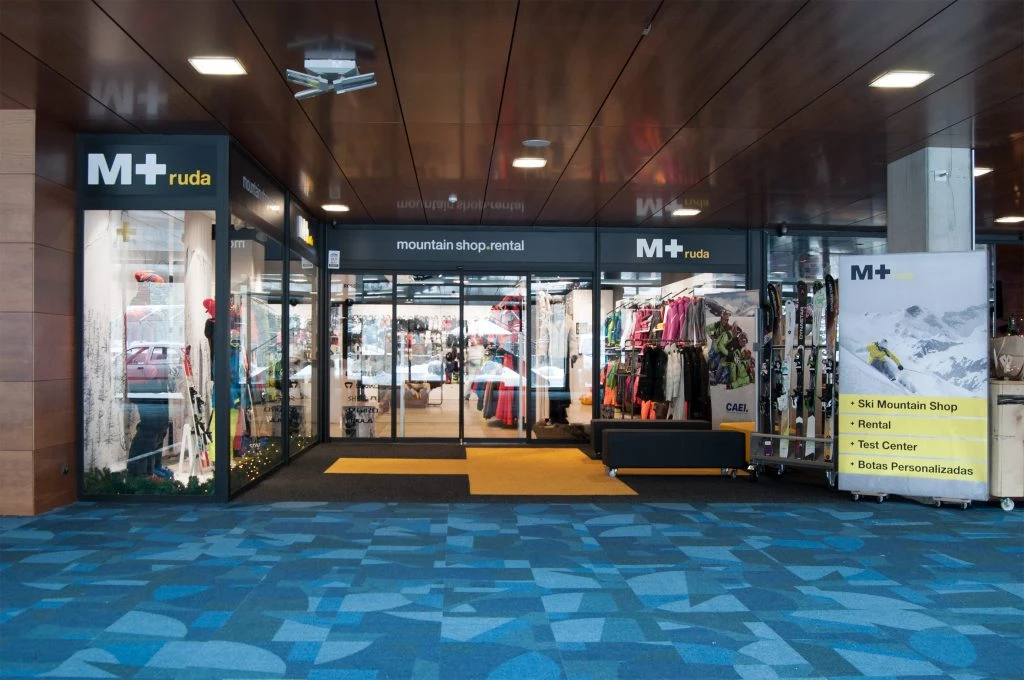
The answer depends on how often you ski. If you come for one or two weeks a year, renting always works out better: no upfront investment, no annual servicing, nothing to transport, and the chance to try the latest equipment every season. The leading shops in Baqueira renew their fleet constantly — it is not unusual to walk out on skis from the current season.
If you ski more than 15-20 days a year, buying starts to pay for itself. Boots above all: your own boots, heat-moulded to your foot, make a real technical difference that rental cannot reproduce. The foot passes every intended movement to the ski through the boot — with rental there is always a little play that costs you precision.
💡 Instructor's tip: If you are on the fence and you are taking lessons with us, tell us your level and your goals before you buy. A common mistake: buying top-end skis while you are still an intermediate. The equipment will be too much for you and will hold your progress back instead of speeding it up.
2. Why Equipment Quality Really Matters
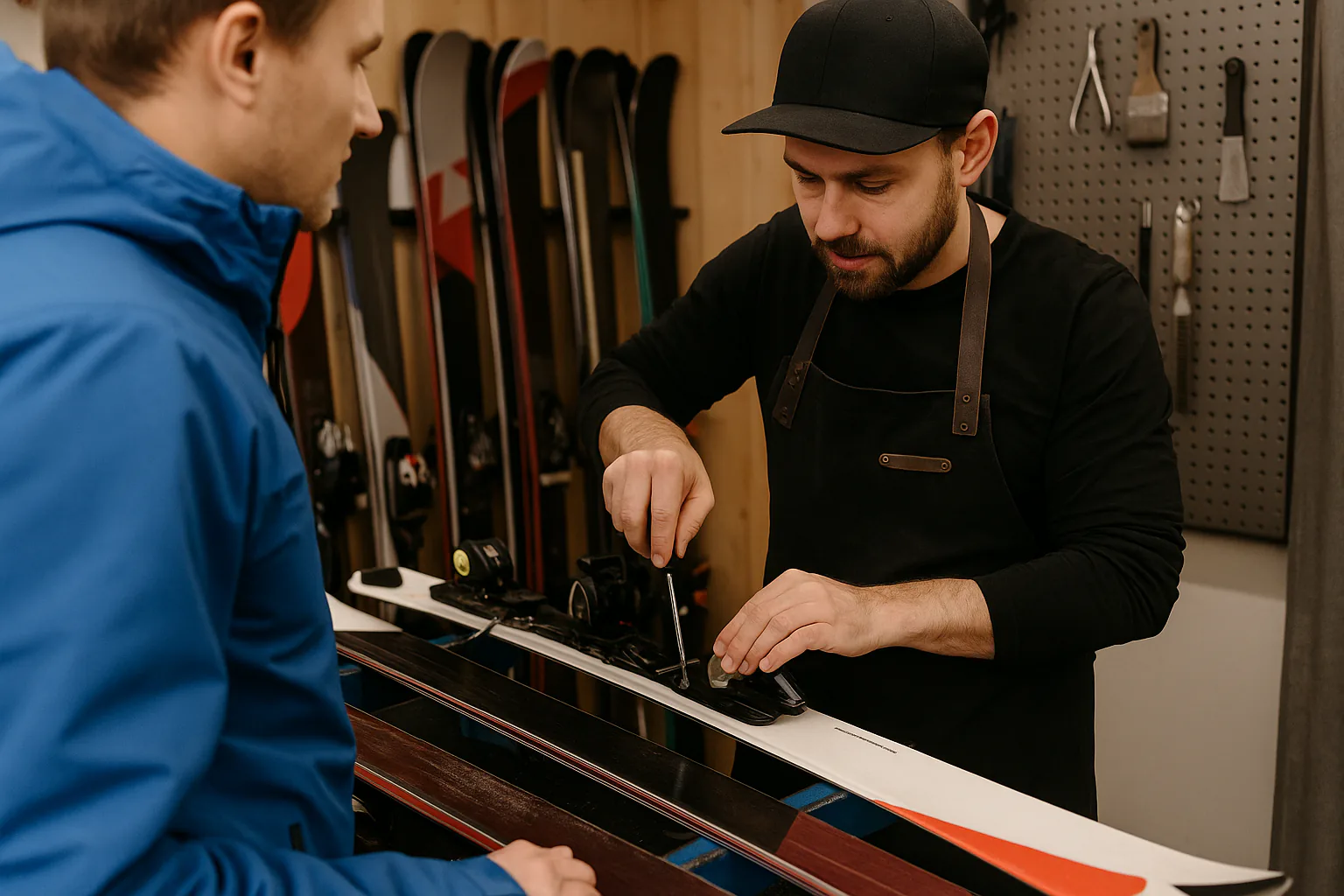
Not all rentals are the same. A ski with blunt edges will not grip on hard snow. An unwaxed base does not glide evenly. Badly set bindings can release too early or, worse, fail to release when they should. The difference between well-maintained equipment and poor-quality equipment is not cosmetic — it is a matter of performance and safety.
- Greater safety: bindings set correctly to your weight and skiing level, sharp edges and waxed bases give you the control you need to ski with something in reserve.
- Better progression: equipment matched to your technical level makes learning easier. On skis that are too stiff or too long, correct technique becomes almost impossible to produce.
- More time on the piste: well-fitted boots take the discomfort away. Blisters, pressure points and numb toes are signs that the boot is wrong — not that skiing is hard work.
💡 Instructor's tip: You can always go back to the shop to have your boots adjusted during the day. Good shops do it at no charge. It is a service, not a favour.
3. How to Choose Skis for Your Level
Skis for Beginners: Control and Room for Error
- Length: 10-15 cm shorter than your height. It reduces the weight in the tip and tail, making directional control and the transition between turns easier.
- Turn radius: Short (12-15 m). It makes entering the turn easy, without needing speed or technical pressure.
- Flex: Soft, light skis. They absorb bumps and forgive technical mistakes at low speeds.
- Waist width: 70-75 mm. A stable platform on groomed snow, without so much float that control suffers.
Skis for Intermediates: Stability and Versatility
- Length: 5-10 cm shorter than your height. More stability in wide turns and at higher speed.
- Turn radius: 14-17 m. Control in turns at speed without giving up agility.
- Construction: More robust materials, possibly a layer of titanal or carbon fibre. More energy out of the turn.
- Waist width: 75-85 mm. Lets you explore a wider variety of terrain without losing efficiency on groomed pistes.
Skis for Advanced and Expert Levels: Specialisation
- Length and discipline: SL (slalom): 155-165 cm. GS (giant slalom): 175-195 cm. Freeride/all-mountain: personal choice, according to the terrain you prefer.
- Waist width: Narrow 66-70 mm for pure piste · Medium 70-86 mm for all-mountain · Wide 86-120 mm+ for freeride and powder.
- Materials: Double titanal, carbon, advanced fibres. They need solid technique to make them work — in inexperienced hands they are harder to handle, not easier.
💡 Instructor's tip: Baqueira has every kind of terrain: wide, well-groomed pistes in the 1800 sector, technical terrain in Argulls and Escornacrabes, powder in the Beret sector after a snowfall. All-mountain (75-85 mm waist) is the most versatile option if you want to ski everything without changing equipment.
4. Boots: The Most Important Part of the Rental
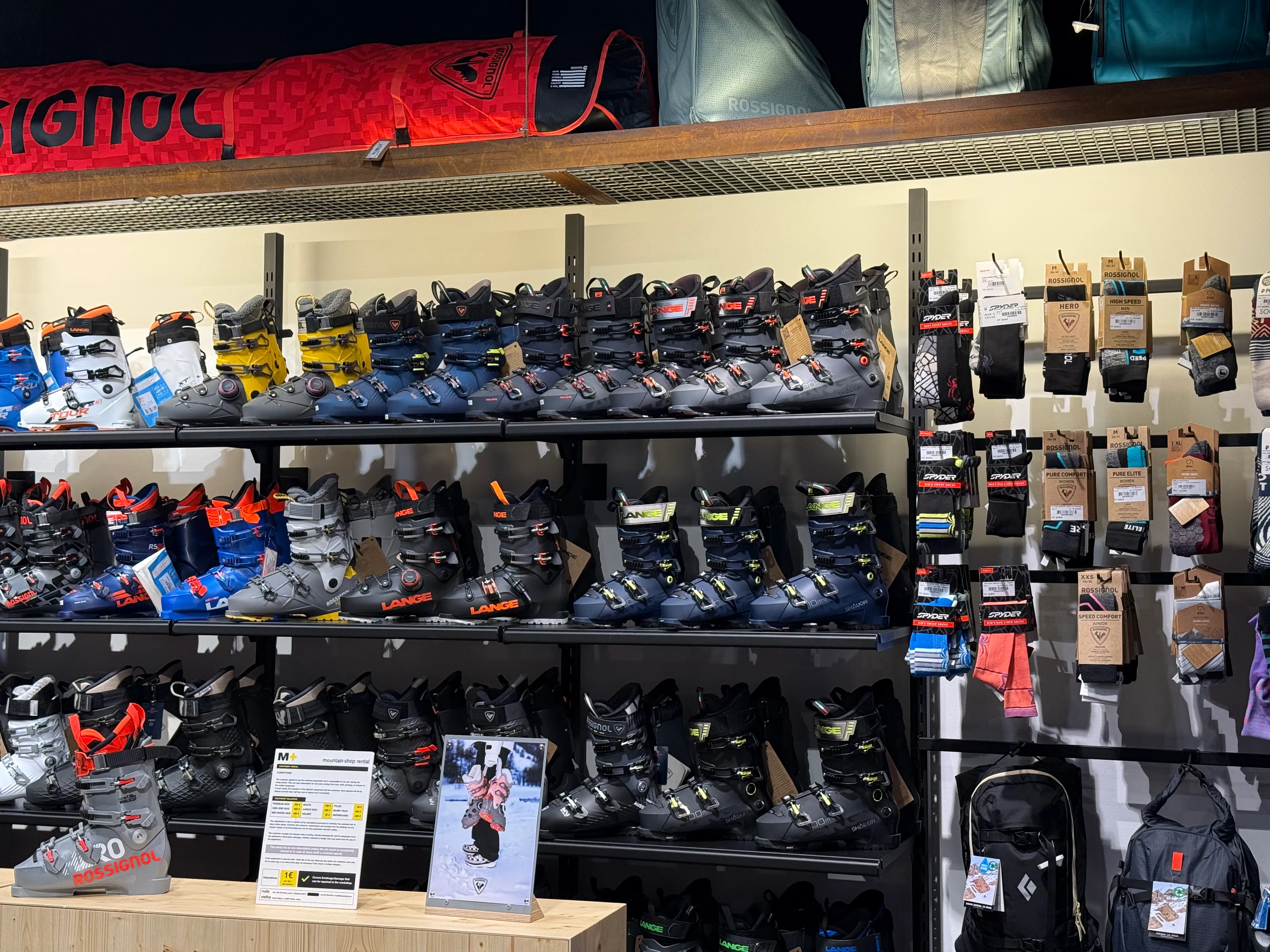
The boot is the link between your body and the ski. A poor fit does not just hurt — it technically compromises everything you do on the snow. The foot passes every intended movement to the boot, which passes it to the ski. With too much play, that message arrives late or distorted.
- Flex: A stiffness rating from 30 to 140+. 30-60 for children and beginners, 60-100 for intermediate levels, 100-140+ for experts. A higher flex returns more energy out of the turn — but you need the technique to make use of it.
- Last (width): 97-98 mm for maximum precision (narrow foot) · 99-101 mm balances comfort and control · 102-103 mm puts comfort first (wide or sensitive foot).
- Rental vs buying: Rental boots use softer plastics for durability. Your own boots — with harder plastics and a heat-mouldable liner — give a level of technical transmission that rental cannot reproduce.
💡 Instructor's tip: Never take a bigger boot 'for comfort'. The foot should be snug with no pressure points — the liner packs out with the warmth of the first few hours. An oversized boot compromises control and can cause friction blisters. Always ask to try several sizes.
5. Poles: A Small Detail With a Big Effect on Technique
A badly sized pole alters your stance without the skier noticing. A pole that is too long tips the body back. Too short pushes it too far forward. Both compromise the fore-and-aft balance that underpins any well-executed turn.
- Standard measurement: Turn the pole upside down, grip it just below the basket and rest it on the ground. Your arm should be bent at 90 degrees.
- Short poles: They help with tight turns and mogul fields. More lateral agility.
- Long poles: More push on flat terrain, useful for keeping your rhythm in wide turns and carving.
6. Snowboard Rental Guide: Board, Flex and Profile
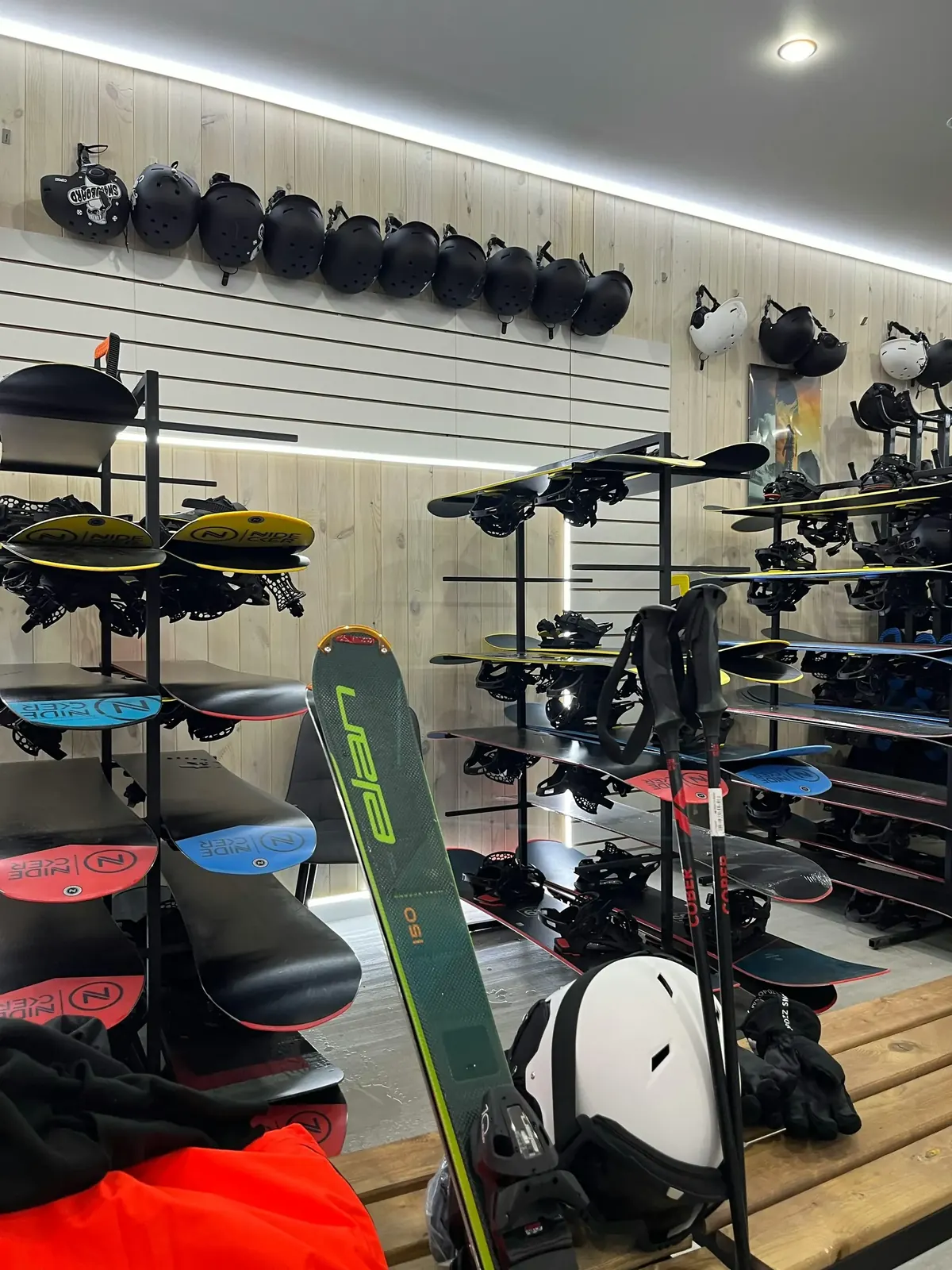
Board Flex
- Soft (1-4): Easy to handle and forgiving of mistakes. For beginners and freestyle in the snowpark.
- Medium (4-7): Versatile and stable on all types of terrain. Ideal for all-mountain use.
- Stiff (7-10): Very stable at high speed with strong grip on hard snow. For freeride and advanced riders.
Board Profile
- Camber (positive curvature): More grip and response. Perfect for piste and carving.
- Rocker (negative curvature): Makes turning easier and floats better in powder. Ideal for beginners and freeride.
- Hybrid: Combines grip and float. The most all-round rental option.
Length and Width: The Basic Rules
- Length: Stood on end, the board should reach somewhere between your chin and your nose. Shorter → easier to turn (beginners and freestyle). Longer → more stable at speed and more float in powder (freeride).
- Waist width: Boots < 42 EU → standard board. Boots 43+ EU → wide board, so your feet do not overhang and catch.
💡 Instructor's tip: Quick summary: beginner → short board, soft flex, rocker profile. All-mountain → medium length, medium flex, hybrid. Freeride or carving → long board, stiff flex, camber or hybrid with nose rocker.
7. Helmet and Protection: Non-Negotiable
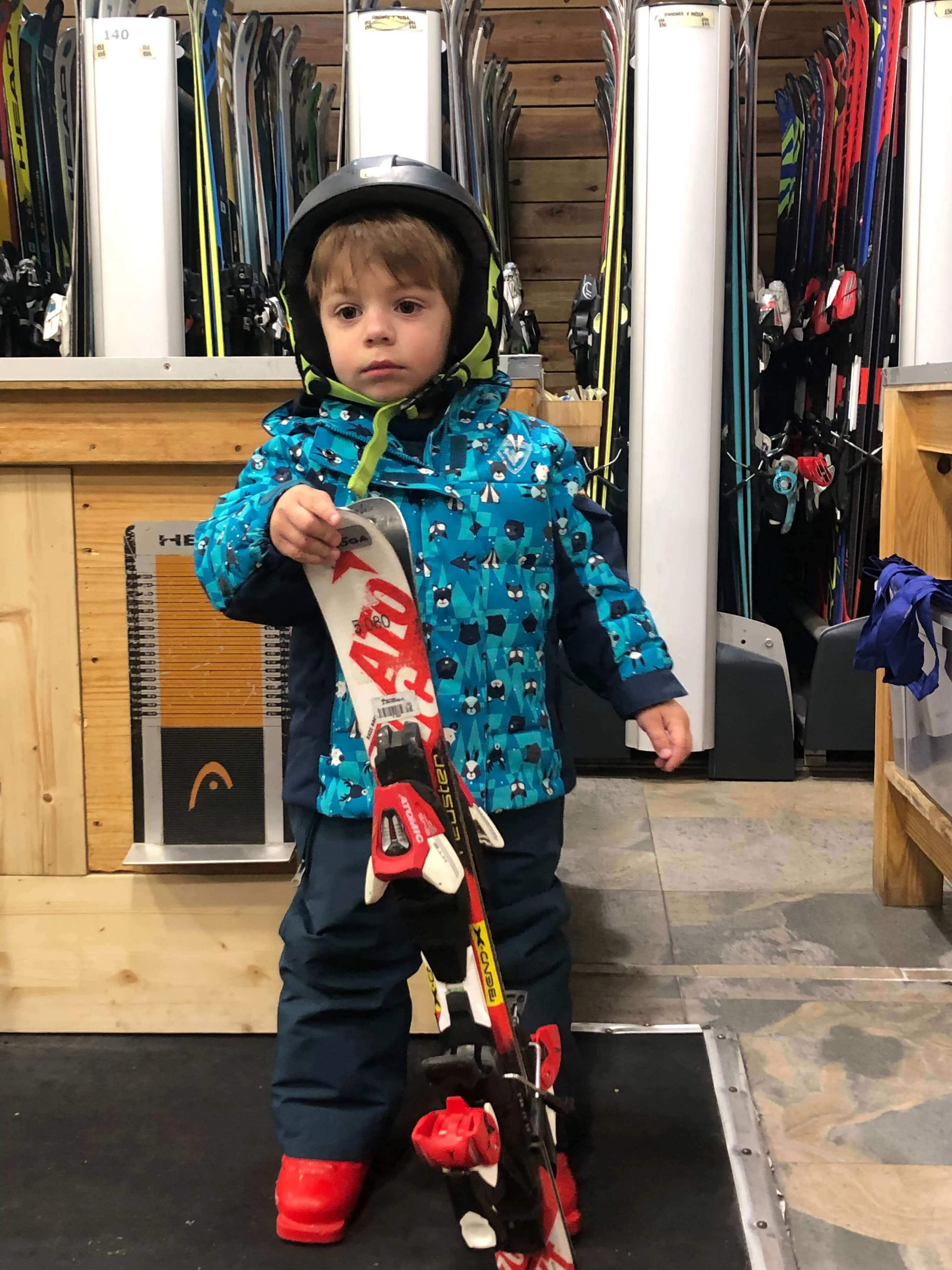
The helmet has gone from optional to essential. Baqueira Beret does not require one under resort rules, but it is the most important safety decision you can make before heading out onto the piste. A fall at 30 km/h without a helmet can be irreversible. With a helmet, the same fall is just a scare.
- Correct fit: The helmet should sit still when you shake your head, without pressing on your temples or forehead. If there is any side-to-side movement, it is not adjusted properly.
- Certification: Look for CE EN 1077 certification for alpine skiing. It is the European safety standard for snow helmets.
- Children: Helmets are compulsory for all minors in our lessons. There is no negotiating on this point — it is a safety rule, not a recommendation.
- Back protectors: Particularly recommended for snowboarding, freeride and freestyle. The leading rental shops in Baqueira have them available on request.
💡 Instructor's tip: Rental shops stock helmets. If you do not have your own, ask for one when you hire the rest of your equipment — it does not add much to the cost and it removes the biggest risk of the day.
8. Where to Rent in Baqueira Beret: Our Partners
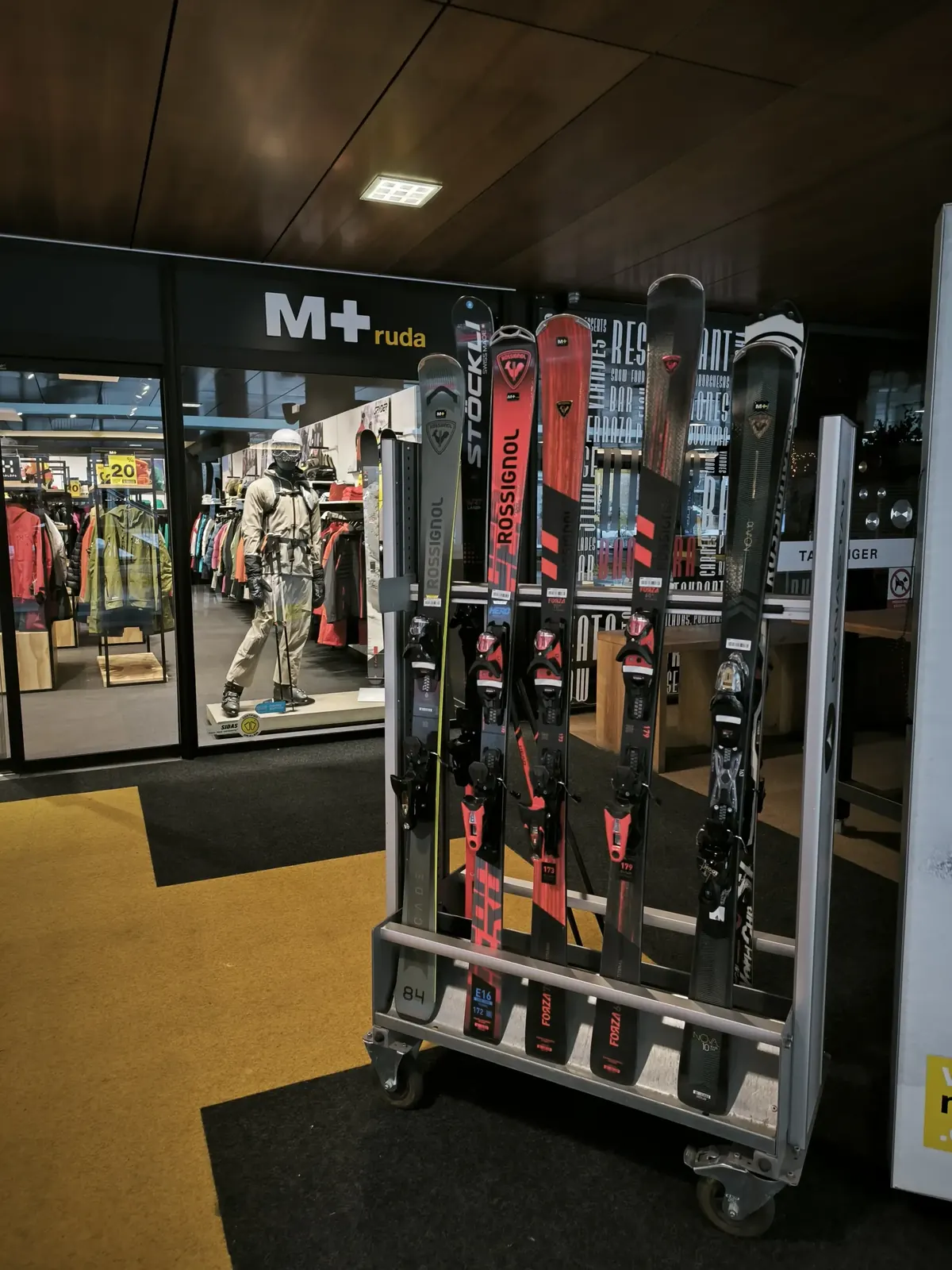
We are not a rental shop. We are a school, and that gives us perspective: we know which places look after their equipment, set bindings properly and have technical staff who know what they are doing. We work with selected partners because we know them and trust their judgement.
If you say we sent you, they will know, and they will give you the attention our students deserve. No unnecessary waiting, real advice, and equipment properly prepared for your lessons.
M Plus Ruda — At the Foot of the Slopes in Baqueira 1500
📍 Shopping arcade, Urb. Vall de Ruda, Local 4 · Baqueira 1500 · Tel. 973 644 847 · ruda@mplusstore.es
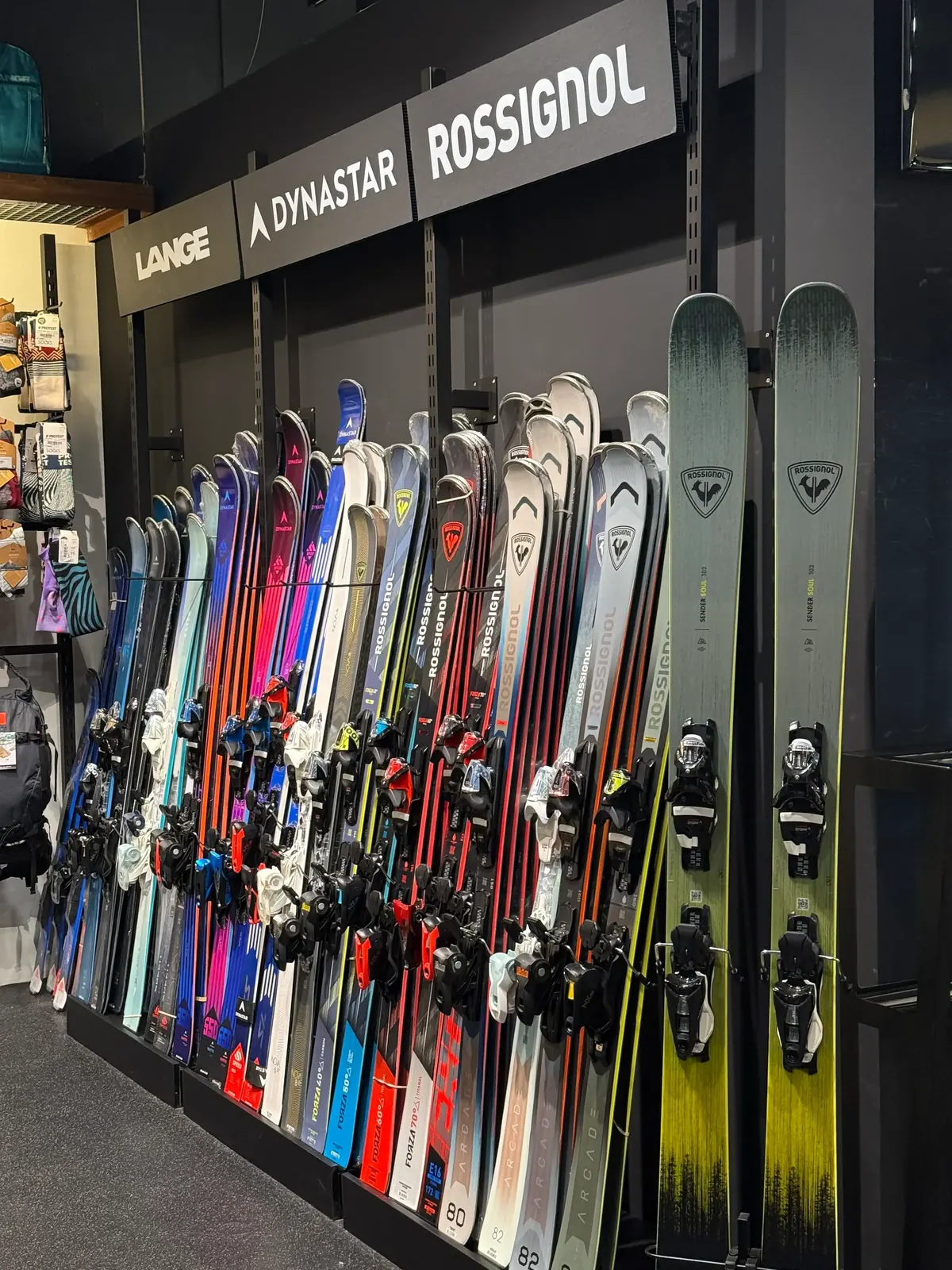
Official dealers for Rossignol, Dynastar, Lange and Briko. The fleet is renewed constantly, with mid-range, high-end and premium equipment. The easiest option logistically: you are at the foot of the slopes, so collection and return happen without you going out of your way. Three rental tiers — mid-range, high-end and premium — so the equipment suits both your level and your budget.
Experienced technical staff who advise on choosing your equipment. Bindings adjusted on the spot, and the option to collect your equipment the evening before so you do not lose piste time in the morning.
🎿 Mention that Alpine Ski Academy sent you when you collect your equipment. You will get special, priority attention.
Official website: mplusstore.es — Ruda rental
M Plus Vielha — If You Are Staying in the Valley's Capital
📍 Carrèr Major, 2 · 25530 Vielha · Tel. 973 641 899 · vielha@mplusstore.es
The same quality and the same brands as M Plus Ruda, in the centre of Vielha. The perfect option if you are staying in the capital of the Aran Valley and would rather collect your equipment in the town before heading up to the resort. The same tiers are available: mid-range, high-end and premium. Important: M Plus Vielha does not take bookings online or by phone — equipment is hired in the shop itself.
🎿 The same arrangement as at Ruda: mention Alpine Ski Academy when you arrive and you will be given special treatment.
Official website: mplusstore.es — Vielha rental
Mombi Surf — The Valley's Snowboard Specialists
📍 Carrer Dera Bonaigua, 7 · 25598 Salardú · Tel. 973 64 50 81 · Opening hours: 8:30-13:00 and 16:00-21:00
Founded in 1989 — more than 30 years specialising exclusively in snowboard and splitboard. This is not a ski shop that also stocks boards: it is a snowboard shop that knows snowboarding. They work with brands such as Jones and Nideker, equipment chosen by riders for riders.
Full rental of board, bindings and boots. They also carry backcountry safety equipment: helmet, avalanche transceiver (ARVA), shovel and probe on request. One unique advantage: if you try a board and decide to buy it, they take the rental price off the total purchase. They are 5 km from the resort, on the way up from Vielha — with their own customer car park.
🎿 Tell them Alpine Ski Academy recommended you — their team will give you their fullest and most personal advice.
Official website: mombisurf.com · Online rental: mombisurf.com/alquiler
9. When to Collect Your Equipment: The Detail That Saves the Most Time
The evening before. Whenever you can, collect your equipment the day before your first lesson. The reasons are practical and straightforward:
- You avoid the queues first thing in the morning — the shops get swamped between 8:00 and 9:30 on the busiest days.
- If there is a problem with the fit or the size, you have time to sort it out without pressure.
- You arrive at the lesson with your kit on and adjusted, rather than trying to pull your boots on with your gloves on in the car park.
- At M Plus, you can return equipment the following morning until 9:30 at either of their shops.
You might also like
- How to get to Baqueira Beret
- Guide to learning to ski in Baqueira (beginners)
- The best apps for skiing in Baqueira