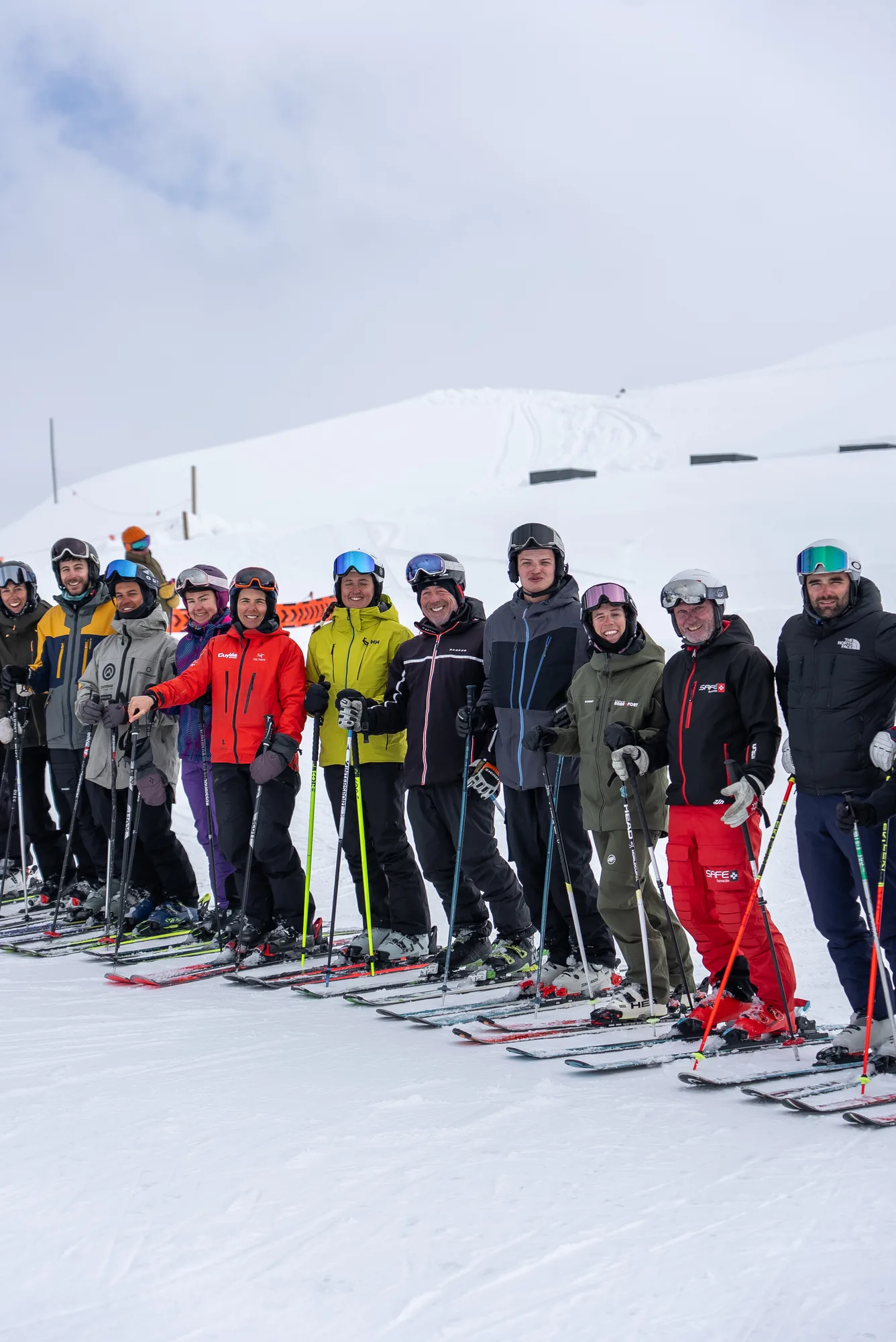
If you want to turn your skiing into a profession, the TD1 in alpine skiing is the way in and the TD2 is the next step. In this article I explain what you need to get in and what the test is like. You will also see what each level allows, how long the training takes and how the work placement works in Baqueira.
I see it from both sides every winter. I am part of the SAFE Formación training team in Baqueira Beret and I run a ski school in Baqueira Beret with TD1, TD2 and TD3 instructors.
People who want to become ski instructors tend to have the same questions. What standard of skiing do they ask for? When are the tests? Can I work with just the first level? And what if I am already an instructor in another country? The information is out there, but it is scattered across the BOE, the regional governments and each training centre. Here it is, in order.
How to become a ski instructor in Spain: the route, step by step
Official training as an alpine ski instructor in Spain always follows the same order:
- Meet the requirements. At least 16 years old and the ESO (Spanish lower-secondary certificate), or a maturity test.
- Pass the entrance test. The alpine skiing entrance test. It is only required for the TD1.
- Take the TD1. Common and complementary blocks (online at SAFE) and the specific block in person.
- Do the TD1 work placement. At a ski school, with an assigned tutor.
- Take the TD2. No entrance test, once you have passed the TD1. On finishing it you get the Técnico Deportivo qualification.
Each step has its details, and you have them set out in the sections below.
What is the TD1 in alpine skiing, and what can you teach with it?
The TD1 is the first level of the intermediate-grade Técnico Deportivo en Esquí Alpino. Passing it does not give you an official qualification but a certification: the first-level certificate. The Técnico Deportivo qualification comes with the TD2. Even so, the TD1 is the one that puts you to work on the piste from your first year.
Real Decreto 319/2000 defines the TD1 profile as introducing people to alpine skiing. It means taking a pupil to the point where they ride the lifts on their own and come down red runs safely, with the basic parallel turn. That profile sits on the resort's marked pistes and leaves out ski mountaineering and cross-country skiing.
The same decree places the TD1 inside an organisation: a ski school, a club, a federation, a sports-services company or a school. And it places them under the general supervision of higher-level technicians. It is the way into the profession, not the end of the road.
Requirements for taking the TD1 in alpine skiing
To enrol on the TD1 you need:
- Be at least 16 years old (with your parents' consent if you are a minor).
- Have the ESO or equivalent. If you do not, you can sit a maturity test.
- Have passed the specific alpine skiing entrance test.
What changes with the TD2? An official qualification and a wider professional profile
The TD2 is the second level of the intermediate grade and has no entrance test: the only requirement is a TD1 passed in the same discipline. On finishing it you get the official Técnico Deportivo en Esquí Alpino qualification. Under Real Decreto 319/2000, it is equivalent in every respect to an intermediate-grade vocational qualification.
The TD2 profile widens teaching to the skier's technical and tactical refinement, and adds basic coaching of athletes and teams. The decree describes this technician as able to take on their responsibilities independently or within an organisation. Their scope covers marked pistes and off-piste inside the resort's ski area. Ski mountaineering is excluded, as is any terrain requiring climbing or mountaineering techniques or equipment. The profile also covers leading athletes and teams in regional competition.
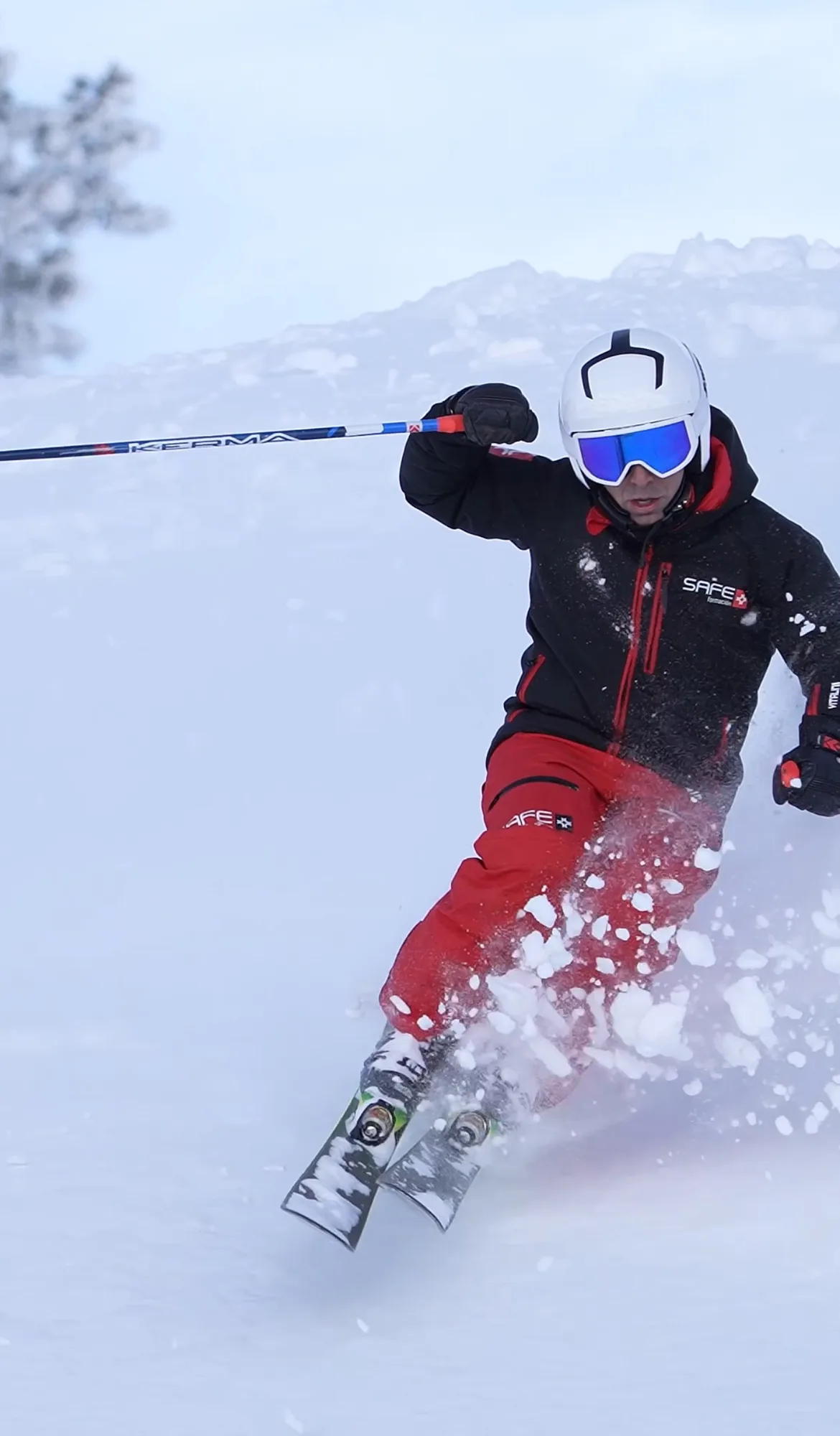
The TD2 comes to 620 hours and adds a new module, alpine skiing coaching methodology. You have the detail on the official SAFE Formación page for the TD2 in alpine skiing.
With the Técnico Deportivo qualification you get direct access to any bachillerato stream. For the TD3 you need the bachillerato and the TD2 in the same discipline.
A sports qualification and the right to work are not the same thing
The TD1 and TD2 profiles describe what each level trains you for. Real Decreto 319/2000 itself makes clear that those profiles do not regulate the practice of any profession.
The conditions for working depend on each autonomous community. In Catalonia, where Baqueira is, the practice of sports professions is governed by Law 3/2008. That law rests on the Official Register of Sports Professionals of Catalonia (ROPEC), which accredits the people who practise them.
The alpine skiing entrance test: what it involves and the level required
The entrance test is the first filter before starting the TD1. It checks that you have the fitness and the skill to get the most out of the training. It has two parts and you have to pass both.
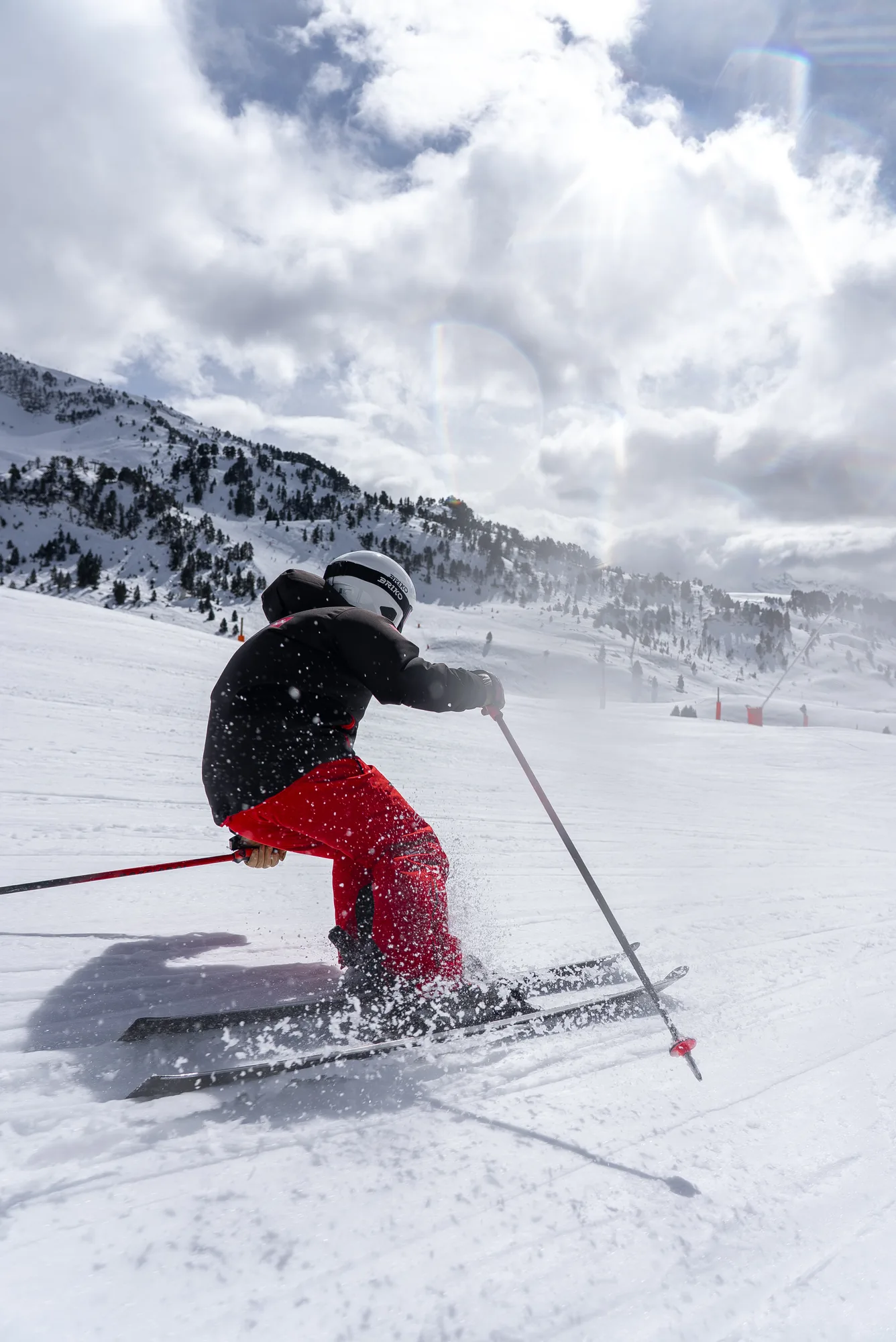
First part of the entrance test: two descents with varied turns
You make two descents linking turns of varying radius and arc:
- The first on a groomed piste of between 35 and 45 % gradient, with at least one change of gradient.
- The second on preferably ungroomed snow and on uneven terrain.
Each run is marked from 1 to 5 and you need at least a 3 on both. The examiners assess, among other things:
- Your position over the skis.
- Control of speed and of the line.
- How you adapt the movement to the terrain, the snow and the rhythm.
Second part of the entrance test: a timed giant slalom
The second part is a giant slalom course that you have to complete within the time the examiners set. That time is calculated from how long skiers with FIS points take, plus a margin according to their level. You get two runs. If you pass on the first, you are not obliged to take the second. If you do, the better of the two counts.
There are three more things worth knowing:
- The examiners have to be higher-level Técnicos Deportivos in alpine skiing.
- A pass is valid for eighteen months.
- There is no limit on attempts, but individual parts are not certified either: you have to pass the whole test.
High-level and high-performance athletes are exempt. You have the full rules on the SAFE Formación page for the alpine skiing entrance test.
How to prepare for the entrance test in Baqueira
You can arrive with a good general standard and still not have worked on what the examiners look at. For example: linking different radii without losing control, adapting to ungroomed snow, or holding your line at a set rhythm.
At Alpine we prepare candidates with private lessons for adults built around those criteria. If you want objective data on your symmetry and edging, we add Carv.
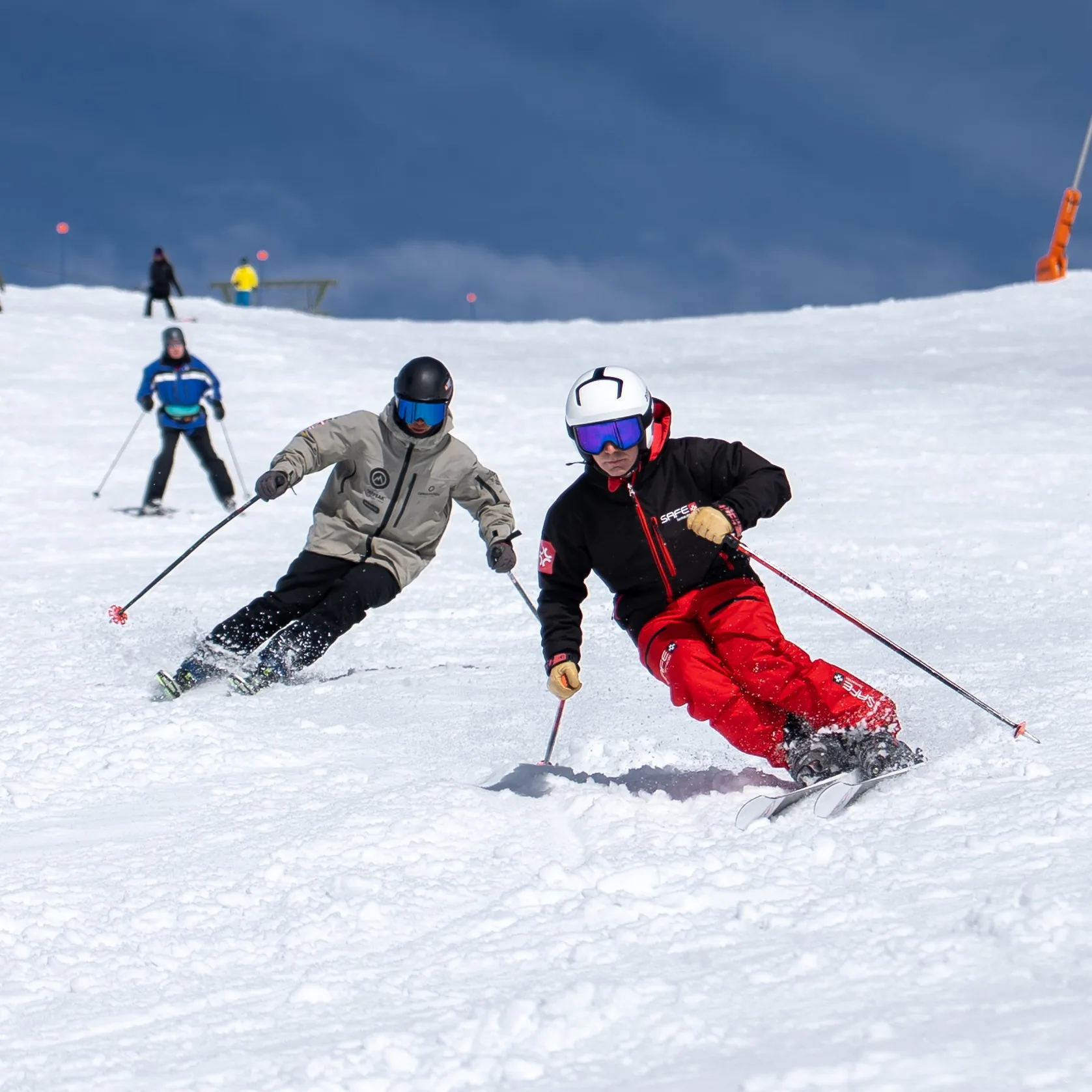
Not sure your level is there yet? Tell me how you ski on WhatsApp and I will tell you honestly how far off you are.
Blocks and subjects of the Técnico Deportivo in alpine skiing
Each level has four blocks. You can take them in whichever order you prefer, except the work placement, which always comes last.
At SAFE, the common and complementary blocks are done online. The specific one is in person, on the piste and in the classroom. A passed common block counts towards any winter discipline at the same level.
| Block | TD1 (465 h) | TD2 (620 h) |
|---|---|---|
| Common (online) | 105 h: anatomical and physiological bases, educational psychology, training, sociology, legislation, first aid | 95 h: anatomical and physiological bases, educational psychology, training, legislation, theory and sociology of sport |
| Complementary (online) | 25 h | 45 h |
| Specific (in person) | 185 h: professional development, technical training, equipment, the mountain environment, teaching methodology, sports safety | 280 h: the same modules, extended + coaching methodology |
| Work placement | 150 h | 200 h |
If you have studied something sport-related, you can get modules of the common block recognised under Orden EFP/892/2023. The full breakdown of hours is on the official SAFE Formación page for the TD1 in alpine skiing.
Ski instructor work placements in Baqueira: how they work
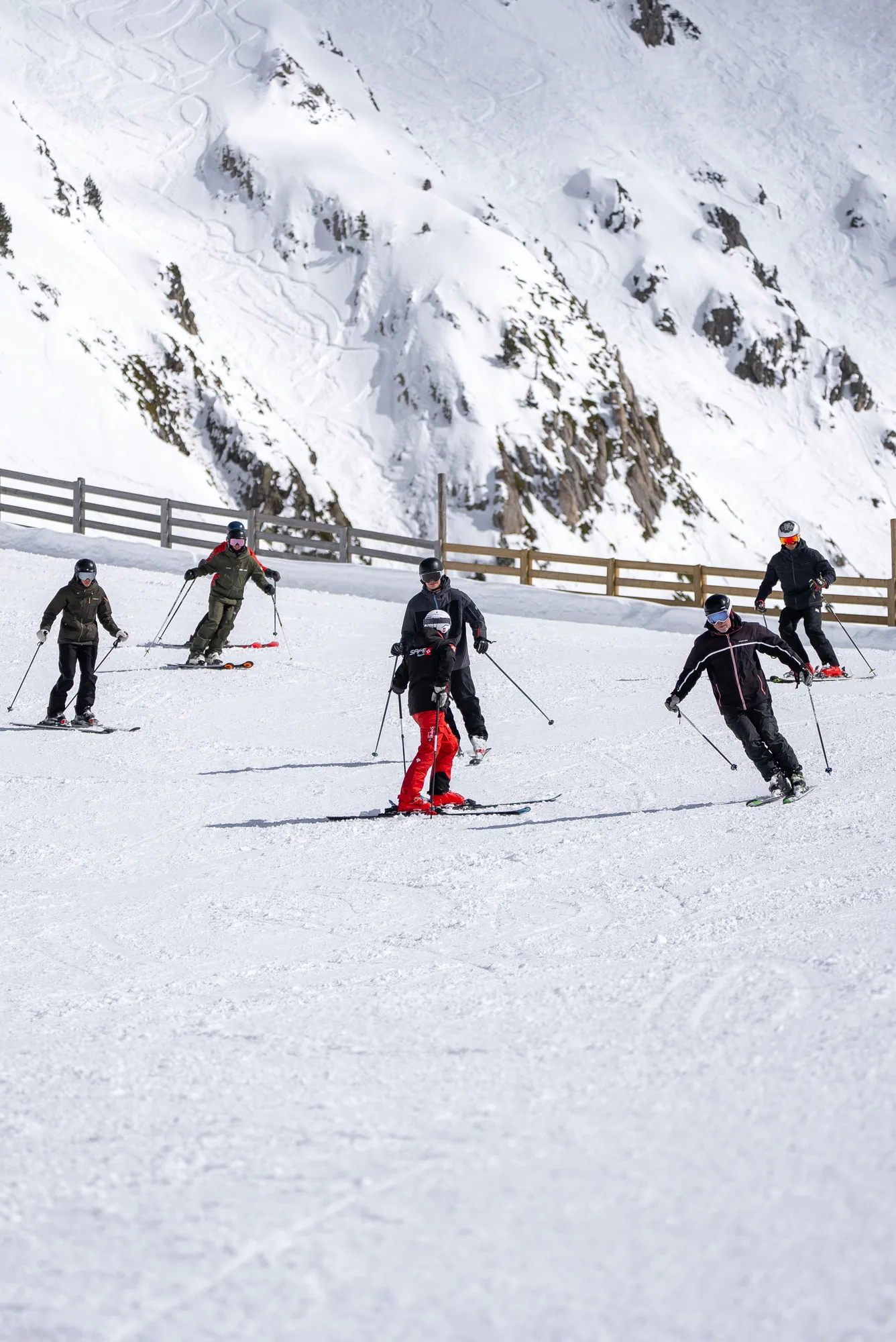
The placement is where you really learn the job. On the TD1 it means attending beginner lessons continuously, always with an assigned tutor. Between 60 and 80 % of the time is teaching on the piste; the rest is planning the sessions.
It has three phases: observation, assisting and supervised teaching. At the end you submit a report, assessed by your tutor and the training centre. To pass you need to attend at least 80 % of the hours in each phase. If you already have experience as a technician or a teacher, SAFE allows you to apply for exemption from the placement. For that you have to evidence more than double the block's hours.
What you really learn on a ski instructor work placement
On the course you learn the technique and the methodology. On the placement you learn to apply them with real pupils, who are nothing like the ones in the manual:
- Reading the pupil before correcting them. What they say they can do and what they do on the first run rarely match. You have to work out whether the block is technical, physical or fear before you give the first instruction.
- Choosing the terrain. The same exercise works or fails depending on the gradient, the state of the snow, how busy it is and the time of day. Picking the right piste is half the lesson.
- Adapting the lesson as you go. When something is not working, you change the exercise, the terrain or the way you explain it without losing the goal of the session.
- Managing safety. You learn where to stand on the piste, where to stop the group and how to move around the lifts with pupils who have only just started.
- Explaining progress. You tell the pupil, or their family, what they have achieved and what comes next, in words they understand.
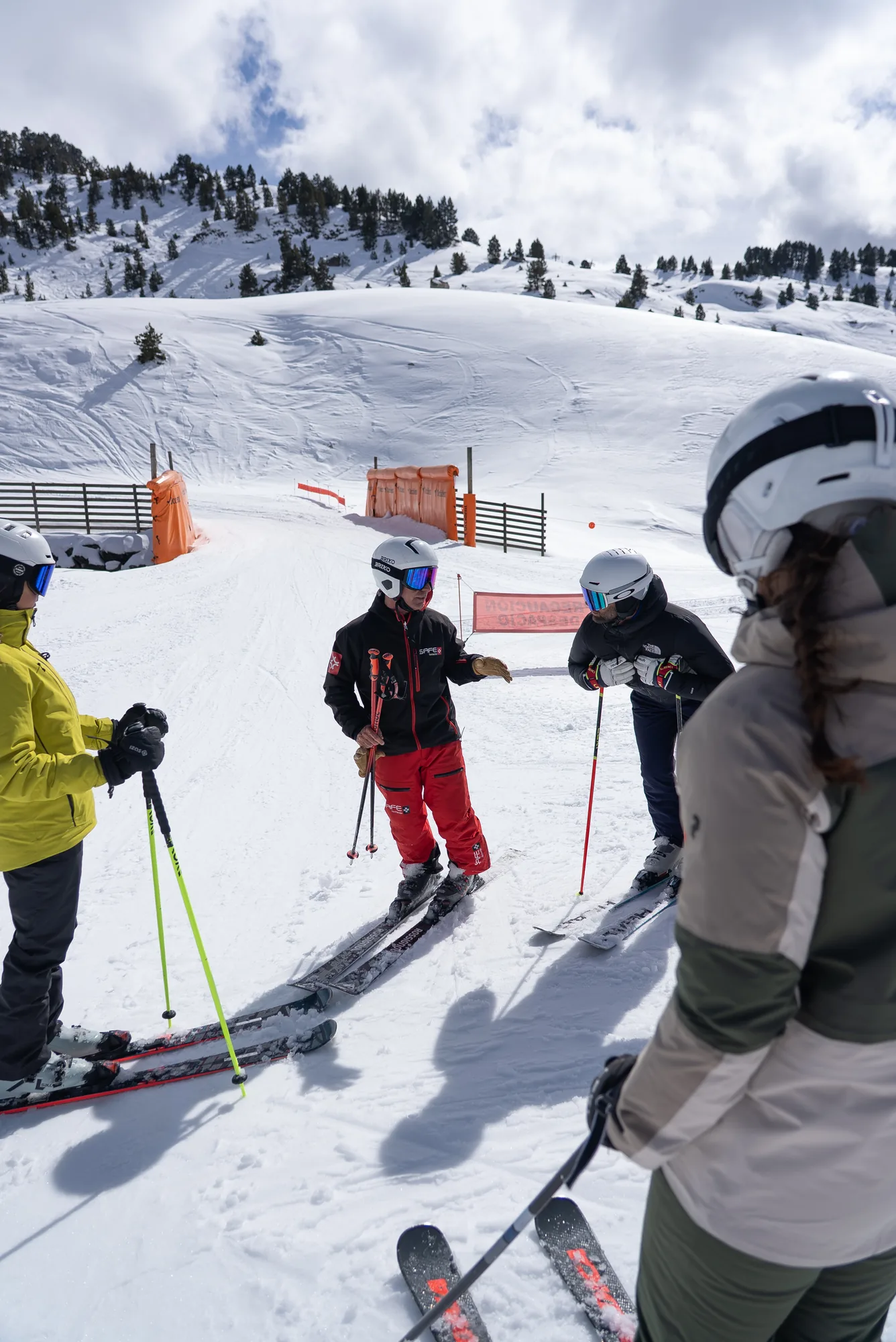
At Alpine Ski Academy we take TD1 and TD2 trainees in Baqueira Beret. You will work alongside the Alpine instructor team, with real pupils and on the terrain where you are going to work. My advice is to choose where you do your placement with the same care you would choose a job. If you would like to do it with us, message me on WhatsApp and we will look at fit and dates.
Are you a ski instructor in another country and want the TD1 in Spain?
More and more instructors trained outside Spain want to work here with the Spanish qualification. Most come from Argentina, but they are not the only ones. If you already teach in your own country, your experience counts. Even so, how your training fits into the Spanish system is not automatic.
It depends on your country, your level and your experience. It also depends on the requirements for working in Catalonia, which run through Law 3/2008 and the ROPEC. That is why each case is assessed individually by the training centre.
If you are already a ski instructor, Level 3 in Argentina for instance, and you want to get the TD1 in Spain, tell me about your case using the contact at the end of this article. I will put you directly in touch with the training centre so they can assess your situation.
Técnico Deportivo ski intakes in Baqueira: when they run
In the Pyrenees, ski technician training is concentrated in two windows that come round every season:
- December: the first few weeks, with the resort just open.
- March: the weeks before Easter.
Catalonia's official announcements follow the same pattern. The first-level specific block takes enrolments for the Christmas holidays and for Easter.
At SAFE, the common and complementary blocks are online and you get access as soon as you enrol. If you sign up early, you can get them out of the way in the autumn. That way you reach the winter with the theory done and can concentrate on the entrance test and the specific block.
The exact dates change each year with the resort's opening and with each intake. Message me on WhatsApp and I will tell you when the next intake in Baqueira is.
Differences between TD1, TD2 and TD3 in alpine skiing
| TD1 | TD2 | TD3 | |
|---|---|---|---|
| What you get | A certification (first-level certificate), not a qualification | Técnico Deportivo qualification (intermediate grade) | Técnico Deportivo Superior qualification |
| Hours | 465 | 620 | 930 |
| Entry requirement | ESO + entrance test | TD1 passed (no entrance test) | Bachillerato + TD2 |
| Teaching profile | Beginners, up to the basic parallel turn on red runs | Technical and tactical refinement + basic coaching | High performance and training other technicians |
| Terrain in the profile | Marked pistes | Marked pistes and off-piste inside the ski area | Marked pistes and off-piste inside the ski area |
Profiles as set out in Real Decreto 319/2000. The requirements for working depend on each autonomous community; in Catalonia, on Law 3/2008.
Start your training as a ski instructor in Baqueira
Now you know how the TD1 and the TD2 work. Three things are left: the date of the next intake, whether your level is up to the test, and where you will do your placement. Write to me too if you are already an instructor in another country and want to get the TD1 in Spain: I will put you in touch with the training centre.
I want to become a ski instructor in Baqueira
Víctor Puche Fita — TD3 in alpine skiing, SAFE Formación training team in Baqueira Beret and founder of Alpine Ski Academy.
Sources, consulted on 06/10/2026: Real Decreto 319/2000, BOE · Law 3/2008 of 23 April, on the practice of sports professions (Catalonia) · SAFE Formación pages for the TD1, the TD2 and the alpine skiing entrance test · Institut de l'Esport de Barcelona (Generalitat de Catalunya).